













Budget
Autococker-threaded Azodins, the JT ER2 and the Spyder Hammer 7. The cheapest ways to try pump play.
Best for: Pump beginners and paint-conscious players.
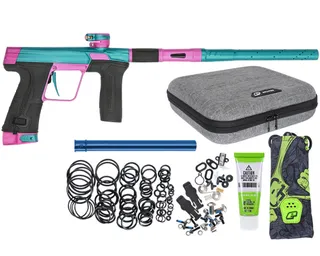
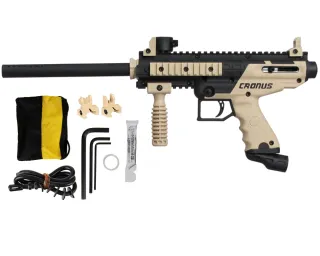
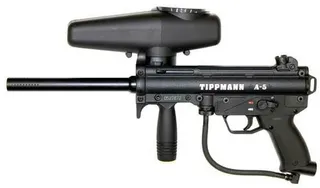
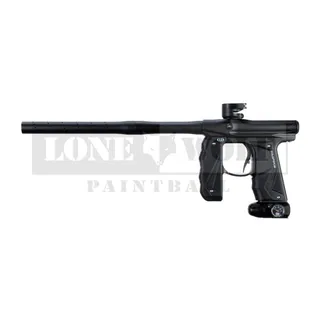
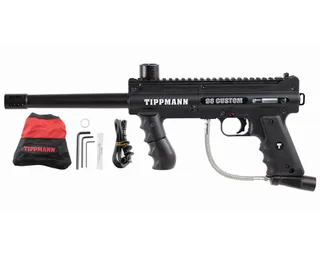
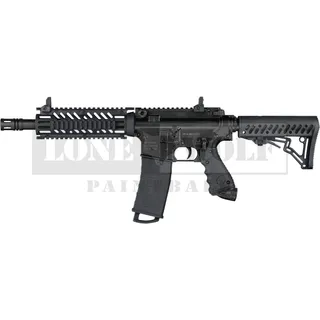
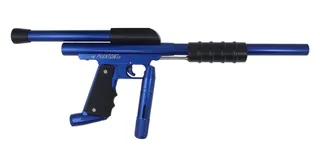

Pump paintball guns ask something of you that semi-automatic markers don't: you re-cock the gun by hand between every shot. That might sound like a handicap, but to a growing community of dedicated players it's the whole point. Pump play strips paintball back to marksmanship, patience, and shot placement, and a skilled pumper can hold their own against ramping electronic guns simply by making every shot count. These markers are also supremely efficient and remarkably quiet.
Pump markers range from a $40 ready-to-play pistol to hand-built collectibles. Pick a bracket and compare.
Autococker-threaded Azodins, the JT ER2 and the Spyder Hammer 7. The cheapest ways to try pump play.
Best for: Pump beginners and paint-conscious players.

The Phantom family, the Empire Sniper, the EMC and the classic Autococker. Where serious pump play lives.
Best for: Dedicated pump and stock-class players.

Hand-built pumps from Inception Designs, Carter Machine and Palmer's Pursuit. Heirloom-grade machining.
Best for: Enthusiasts and collectors.

Best pump overall: The most iconic pump ever made, in production since 1987. A Nelson-valve platform with endless stock-class and open-class configurations.
Mid-Range
Pump, stock class, woodsball
$230 to 450
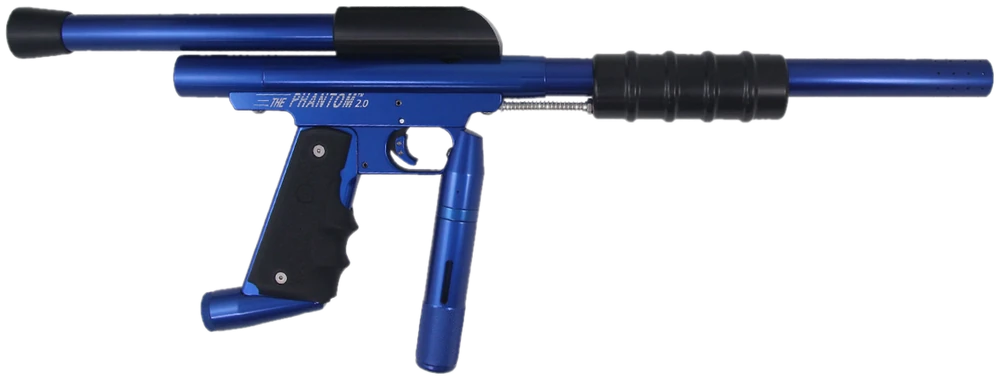
Best stock class: The Vertical Stock Class Phantom: vertical CO2 or HPA and gravity feed, the classic tournament stock-class build.
Mid-Range
Pump, stock class
$280 to 450
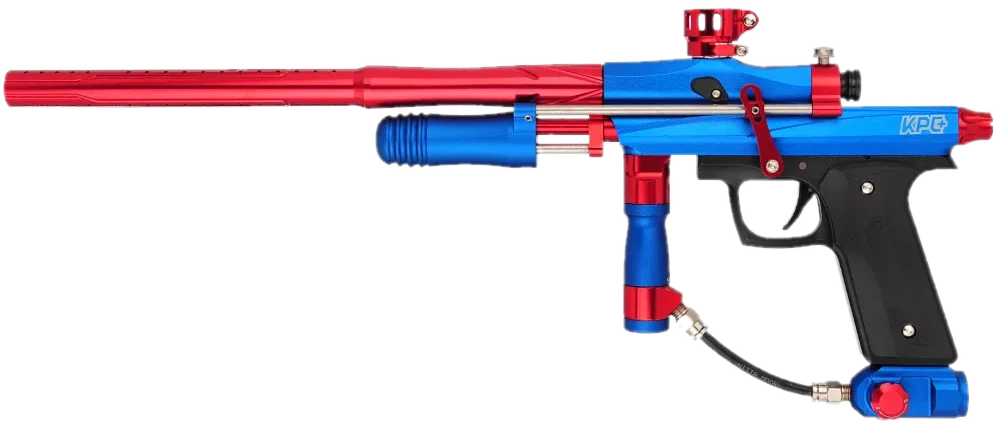
Best budget pump: A regulator and on/off ASA on a Cocker-threaded budget pump, a real step up from the base Kaos Pump.
Budget
Pump, woodsball
$200 to 260

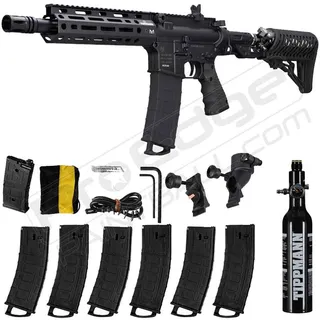
Best milsim pump: A pump-action carbine on the EMEK platform: milsim looks, dual-feed flexibility and Planet Eclipse internals.
Mid-Range
Pump, woodsball, scenario
$380 to 460

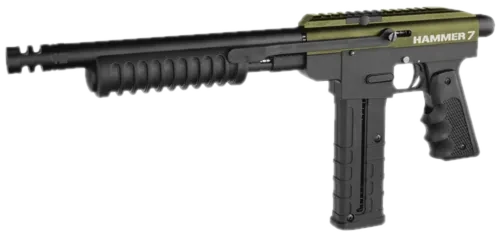
Best sidearm pump: A pump-action magfed pistol built around First Strike rounds for high-accuracy sidearm and stock-class hybrid play.
Budget
Pump, Magfed, scenario
$140 to 200
Best showpiece: A hand-built pump in the Autococker and Sniper lineage, prized for its machining and a glass-smooth stroke.
High-End
Pump, stock class
$450 to 800
The most iconic pump gun ever made (in production since 1987): a Nelson-valve modular platform with endless stock-class and open-class configurations.
Mid-Range
Pump, stock class, woodsball
$230 to 450

An Autococker-threaded pump gun that ships ready to play with a smooth stroke and huge aftermarket barrel compatibility.
Mid-Range
Pump, woodsball, speedball
$400 to 460

A budget-friendly pump that brings players into pump play without the premium price, with an Autococker-threaded barrel.
Budget
Pump, woodsball
$150 to 200
A pump-action carbine built on the EMEK/EMF platform, blending milsim looks with pump play and dual-feed flexibility.
Mid-Range
Pump, woodsball, scenario
$380 to 460

A low-cost pump-action gun styled like a tactical shotgun, aimed at casual pump and rec play.
Budget
Pump, rec, woodsball
$90 to 130
A premium hand-built pump in the autococker/sniper lineage, prized for machining quality and a glass-smooth stroke.
High-End
Pump, stock class
$450 to 800

The original Autococker: a timing-based platform that defined high-end paintball in the 1990s, convertible between pump and semi and endlessly customizable.
Mid-RangeLegacy
Pump, Mechanical, speedball
$150 to 600 USED
A Vertical Stock Class Phantom configuration with a vertical CO2/HPA setup and gravity-feed, the classic tournament stock-class build.
Mid-Range
Pump, stock class
$280 to 450
A pump-action magfed pistol designed around First Strike rounds for high-accuracy sidearm and stock-class hybrid play.
Budget
Pump, Magfed, scenario
$140 to 200

A budget pump-action gun that gave casual players an inexpensive entry to pump play.
BudgetDiscontinued
Pump, rec, woodsball
$60 to 110 USED

An ultra-budget pump pistol/gun often sold as a ready-to-play kit, the cheapest way to try pump-action play.
Budget
Pump, rec
$40 to 80
An improved budget pump with a regulator and on/off ASA, a step up from the base Kaos Pump for serious pump beginners.
Budget
Pump, woodsball
$200 to 260

A cult-favorite pump platform known for its distinctive design and accuracy-focused barrel system.
Mid-RangeLegacy
Pump, stock class
$150 to 400 USED

A classic stock-class pump pistol from paintball's earliest era, the archetype of the minimalist stock-class build.
Mid-RangeLegacy
Pump, stock class
$80 to 300 USED

A revered hand-built pump from Palmer's Pursuit Shop, prized by collectors for craftsmanship and smooth operation.
High-EndLegacy
Pump, stock class
$300 to 900

A legendary hand-built pump from Carter Machine, among the most collectible and smoothest-stroking pumps ever made.
PremiumLegacy
Pump, stock class
$500 to 1,500
Time-honored pump designs offer a pure, mechanical pump experience: a manual stroke, supreme efficiency, and a quiet report. They have a devoted following and a heritage stretching back to the sport's roots, and many remain simple to maintain and a joy to shoot for marksmanship-focused players.
Refined modern pumps bring a smoother, more consistent stroke, contemporary ergonomics, and useful upgrade options to the discipline. They're built for the active pump scene and often share parts and styling with popular semi-auto platforms while keeping the deliberate, one-shot-at-a-time feel.
Pump paintball is where the sport began. The earliest markers were single-shot, pump-action tools that required the player to re-cock between every shot, and while semi-automatic and electropneumatic guns long ago became the mainstream, pump never disappeared. Instead it evolved into a respected discipline with a devoted community, dedicated formats, and a steady stream of refined modern platforms. For many players, picking up a pump is a way of reconnecting with the roots and the purest challenge of paintball.
The mechanism is satisfyingly simple. A sliding pump handle or fore-grip, worked by hand, re-cocks the marker and chambers the next ball after each shot. There's no semi-automatic cycling, no board, and no ramping. Just you, the stroke, and a single deliberate shot. That simplicity translates into mechanical reliability and a quiet report, and it places the responsibility for rate of fire entirely on the player, which is exactly the point of the discipline.
Efficiency is one of pump's greatest practical strengths. Because the marker fires one carefully chosen shot at a time and cycles mechanically, it uses dramatically less air and paint than a semi-auto. A single fill stretches remarkably far, and a pod of paint lasts much longer, which makes pump an economical way to play long days. Paired with HPA and a good regulator, a pump delivers consistent shots while sipping resources that a ramping electro would burn through in minutes.
Pump rewards marksmanship above all else. With no spray-and-pray option, every shot has to count, so players learn to read the field, move stealthily, and place shots precisely. This is why a skilled pumper can hold their own against players with far higher rates of fire, and why pump-versus-semi handicaps and dedicated pump events exist. The discipline sharpens fundamentals that carry over to every other style of play, which is a big reason experienced semi-auto players take it up.
Accuracy and feel come down to the same fundamentals as any marker, with the barrel-to-paint match especially important. A quality barrel sized to your paint, fresh and consistent paintballs, and steady air give a pump its characteristic precision. The smoothness and positivity of the pump stroke matter too. A stroke that re-cocks cleanly and chambers reliably is the difference between a pump you trust and one that frustrates you. Many players upgrade barrels and feed setups to refine the experience.
Maintenance is refreshingly straightforward thanks to the pump's mechanical simplicity. Keep the marker clean, inspect and lightly lubricate the o-rings with paintball-safe oil, and make sure the pump stroke stays smooth and free of grit. On popular platforms, parts are cheap and plentiful and the community is generous with advice. A small field kit with spare o-rings and a barrel swab handles nearly every issue, and there's no battery or board to worry about.
Choosing a pump comes down to the smoothness of the stroke, efficiency, build quality, parts support, and how you intend to play. Whether that's classic stalking in the woods, dedicated pump events, or simply a fresh challenge alongside your semi-auto. Use the comparison and type breakdowns above to narrow the field, then open the individual gun resource pages from the grid for the verified specifications and pricing guidance that will help you pick the pump marker that's right for you.
 Best Pump Paintball Guns. Efficient, rewarding pump markers.Mechanical Paintball Guns. Tough, simple blowback markers. The backbone of rec and beginner play.Woodsball Paintball Guns. Durable markers built for outdoor, scenario, and milsim-style play.
 Paintball Barrels. Barrel bore sizing, length, and porting and how they affect efficiency and sound.
 Paintballs. How paint grade, fill, and shell brittleness affect accuracy and barrel matching.
 HPA Tanks & Air Systems. Compressed-air tanks and regulators that power your marker consistently shot to shot.Paintball Guns & Markers. Every marker in our database with buying guidance by type, skill, and budget.