Browse guns
Collections
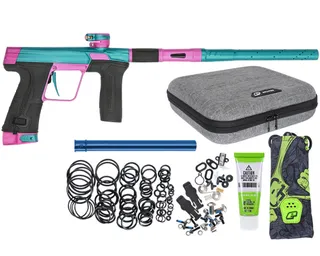
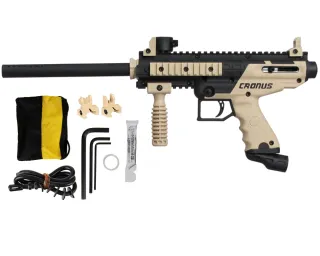
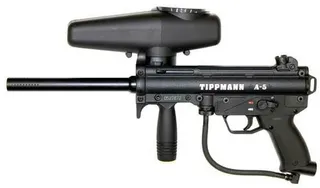
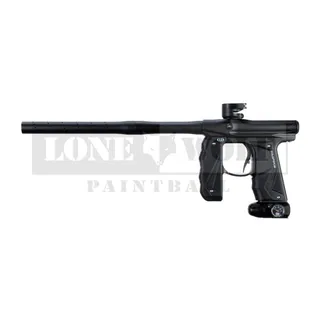
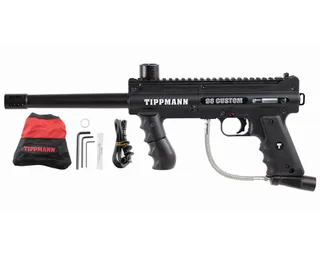
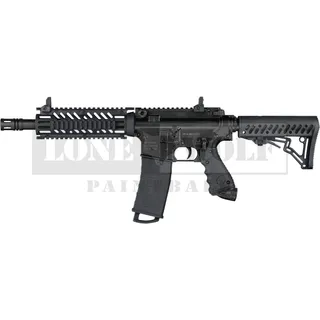
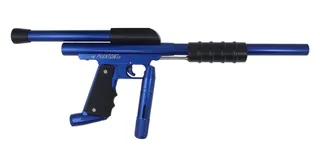













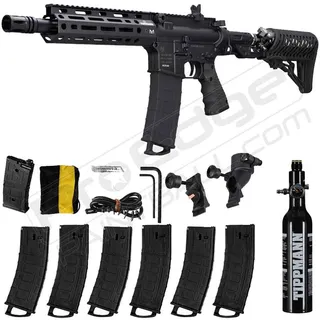
Best Electronic Paintball Guns
The best electronic paintball guns, more precisely electropneumatic markers, use a circuit board and solenoid to actuate the firing cycle, delivering higher, smoother rates of fire than any mechanical trigger can match. They typically shoot more efficiently and with far less recoil, which makes long days easier on your hands and your air, and their boards open up firing modes, adjustable timing, and eye systems that prevent chopping paint. The grid below shows the electronic markers in our database, each with verified specifications on its own resource page.
Electronic markers span a wide range, from affordable entry electros that bring board-driven smoothness to rec players, all the way up to flagship tournament guns. What they share is a reliance on a battery to keep charged, a board to understand, and a preference for clean, stable HPA. In return you get a soft, quiet shot, programmable performance, and the rate of fire that makes competitive speedball possible. For many players, stepping from a mechanical marker to an electronic one is the single biggest upgrade in feel they'll ever experience.
This guide explains what to prioritise when buying electronic, the mistakes that catch players moving up from mechanical guns, and how to weigh smoothness, efficiency, and platform support against price. We don't publish invented specifications or pricing. Where a marker's real numbers exist, you'll find them on that gun's own resource page, reachable from the grid below.
How to Choose the Best Electronic Paintball Gun
What to Look For in the Best Electronic Paintball Guns
- A smooth, low-recoil firing engine (spool or efficient poppet) that's gentle on paint.
- Good air efficiency so a fill lasts and running costs stay reasonable.
- A capable board with multiple firing modes, adjustable dwell, and reliable eyes.
- Easy, ideally tool-less, bolt removal for quick chop clearing.
- A respected platform with strong aftermarket and spare-parts support.
- A preference for stable HPA. Budget for a quality regulator and tank.
- Comfortable ergonomics and a battery that's easy to charge or replace.
Expert Recommendations for the Best Electronic Paintball Guns
Best for Moving Up From Mechanical
An efficient entry-level electropneumatic marker delivers the board-driven smoothness and rate of fire that make electronic guns special, without flagship complexity or cost. Pair it with HPA and you'll feel the upgrade immediately. Browse the electronic markers above to compare real options.
Best for Rate of Fire and Smoothness
If a soft, fast shot is your priority, favour a marker with a refined firing engine and a feature-rich board, fed by a quality regulator and stable HPA. Smoothness and consistency come from the whole system, so build the air around the gun.
Best for Efficiency
Electronic markers known for sipping air keep running costs down and points worry-free. Pair an efficient platform with a good regulator and a correctly sized HPA bottle for confident, economical performance over long days.
Best Electronic Paintball Guns: Frequently Asked Questions
Are electronic paintball guns worth it?
What is the difference between electronic and mechanical paintball guns?
Do electronic paintball guns need HPA?
How fast do electronic paintball guns shoot?
Are electronic paintball guns good for beginners?
What is an electropneumatic paintball gun?
How do I maintain an electronic paintball gun?
What's the difference between a spool valve and a poppet valve electronic marker?
Does a more expensive electronic gun shoot harder?
Can I run CO2 in an electronic paintball gun?
Everything You Need to Know About the Best Electronic Paintball Guns
Electronic paintball guns transformed the sport when they arrived, unlocking rates of fire and a smoothness that mechanical triggers simply cannot produce. By replacing the mechanical sear with a circuit board and a solenoid, an electropneumatic marker can pilot its firing cycle with precision, offering programmable firing modes, adjustable timing, and eye systems that stop the gun firing on a half-loaded breech. The result is a soft, quiet, efficient shot that has defined competitive paintball for two decades and trickled down into rec play.
The firing engine is the heart of any electronic marker. Spool-valve designs move a single bolt assembly back and forth and are loved for a smooth, low-recoil, quiet shot, at the cost of asking a little more from your air. Poppet-valve designs can be extremely efficient and crisp, with a slightly more pronounced kick. Neither is universally better; the right one depends on the feel you want and how well the platform is supported with spares and knowledge. Both, well set up, are a revelation after a blowback marker.
Air is the non-negotiable partner of an electronic marker. These guns are designed around the consistent, repeatable pressure that HPA provides, and they reward a quality regulator that delivers the same output shot after shot. CO2, by contrast, changes from liquid to gas unpredictably and can cause erratic performance or damage seals, which is why it's strongly discouraged for electronic guns. Budgeting for HPA and a good regulator from the outset is part of buying electronic, not an optional extra.
The board is what makes an electronic marker feel modern. Beyond raw rate of fire, it offers firing modes to match different leagues and fields, adjustable dwell and timing to suit your paint and air, and eye systems that prevent chopping balls. Learning to use these features, and keeping the eyes clean and the battery charged, is the difference between a marker that performs flawlessly and one that frustrates you with chops and misfires. A little understanding goes a long way.
Maintenance for an electronic marker is more involved than for a mechanical one, but it's far from difficult. The routine is simple: clean the eyes so they read paint, keep the battery charged or carry a spare, inspect and lubricate o-rings, and replace seals proactively. Tool-less bolt systems on many markers make clearing a chop a matter of seconds. Treat that routine as part of the hobby and an electronic gun will reward you with years of smooth, reliable shooting.
Value across the electronic range is about matching the gun to your needs rather than buying the most expensive option. Efficient entry-level electros bring most of the smoothness and rate-of-fire benefits to rec players for a fraction of a flagship's price, while top-tier markers add refinement that competitive players appreciate. The smartest spend usually pairs a strong body with an excellent regulator and air system, because consistency is a whole-system property, not a feature of the gun body alone.
When you're ready to choose, decide on the firing feel you want, ensure the platform has the parts and community support you can rely on, and build the air system to match before fixating on a body. Be honest about your level, moving up from mechanical, chasing rate of fire, or competing seriously, because the right electronic marker differs for each. Use the comparison above to narrow the field, then follow through to the individual gun resource pages in the grid for the verified specifications and pricing guidance that will finalise your decision.
Related Categories
- Electronic Paintball Guns. Board-driven electropneumatic markers for higher, smoother rates of fire.
- Best Tournament Paintball Guns. Top competitive markers and what separates them.
- Tournament Paintball Guns. High-end electropneumatic markers tuned for competitive speedball.
- HPA Tanks & Air Systems. Compressed-air tanks and regulators that power your marker consistently shot to shot.
- Paintball Loaders & Hoppers. Gravity, agitating, and force-fed loaders that keep your marker eating paint.
- Best Mechanical Paintball Guns. The toughest, simplest blowback markers.