Browse guns
Collections
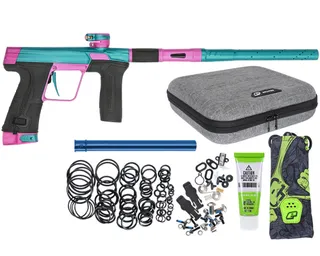
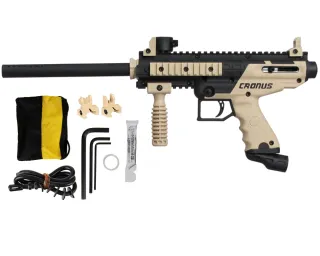
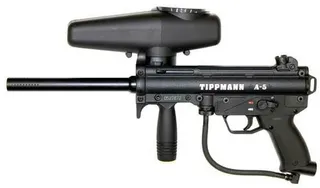
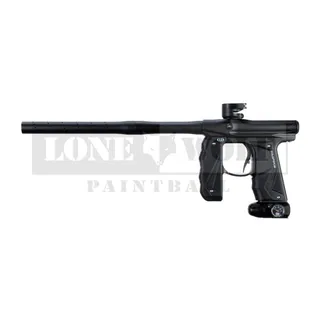
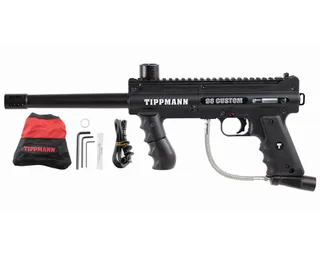
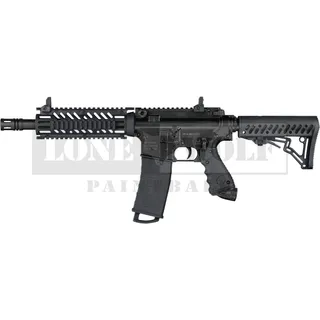
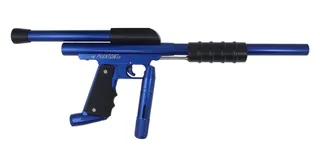













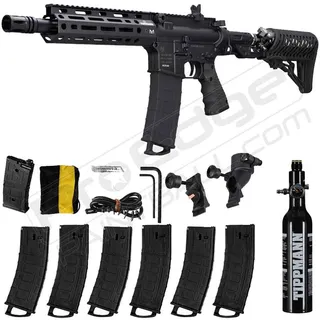
Best Mechanical Paintball Guns
The best mechanical paintball guns are the toughest, simplest markers in the sport. Blowback designs that cycle on spring and air pressure alone, with no circuit board, solenoid, or battery to fail. That simplicity is exactly why they dominate rental counters, beginner recommendations, and woodsball loadouts: they shrug off abuse, strip down with basic tools, and run on o-rings you can buy anywhere and swap in the field for pocket change. The grid below shows the mechanical markers in our database, each with verified specifications on its own resource page.
Mechanical markers are louder and kick more than electronic guns, and they don't reach the same rates of fire, but for a huge range of players that's a fair trade for bulletproof reliability and low running costs. They run happily on HPA or CO2, they tolerate dirt and the occasional drop, and when something does go wrong you can usually fix it yourself without a pit crew. For beginners, casual rec players, and woodsballers who value toughness, a good mechanical marker is often all the gun they'll ever need.
This guide explains what to prioritise in a mechanical marker, the mistakes that turn a simple gun into a frustrating one, and how to think about reliability, air, and running costs. We don't invent specifications or prices. Where a marker's real numbers exist, you'll find them on that gun's own resource page, reachable from the grid below.
How to Choose the Best Mechanical Paintball Gun
What to Look For in the Best Mechanical Paintball Guns
- A rugged blowback design with no fragile electronics to fail.
- Common, inexpensive o-rings and seals that are easy to source and replace.
- Compatibility with both HPA and CO2 so you can use whatever your field offers.
- Simple field-stripping with minimal or no tools.
- Reasonable air efficiency to keep running costs down.
- A reputable, popular platform with a track record at rental counters and a parts supply.
- A platform that accepts the stocks, rails, or barrel upgrades you might want.
Expert Recommendations for the Best Mechanical Paintball Guns
Best for Reliability
A proven inline blowback marker from a popular platform is the textbook reliable choice. Tough, simple, and field-fixable, with parts you can find anywhere. It will survive abuse and keep running for years with minimal care. Browse the mechanical markers above to compare real options.
Best for Beginners
Mechanical markers earn their beginner reputation through sheer dependability and low cost. A simple gun that runs on HPA or CO2 and uses cheap parts frees up budget for the mask and air you genuinely can't cut corners on.
Best for Woodsball Toughness
For outdoor and scenario play, favour a rugged mechanical platform that accepts stocks and rails and shrugs off mud and drops. Reliability and parts availability matter more than rate of fire when you're deep in the field.
Best Mechanical Paintball Guns: Frequently Asked Questions
What is the best mechanical paintball gun?
Are mechanical paintball guns good?
What's the difference between mechanical and electronic paintball guns?
Can mechanical paintball guns use CO2?
Are mechanical guns good for beginners?
How fast can a mechanical paintball gun shoot?
How do I maintain a mechanical paintball gun?
Can I upgrade a mechanical paintball gun?
Are mechanical paintball guns accurate?
Are mechanical guns good for woodsball?
Everything You Need to Know About the Best Mechanical Paintball Guns
Mechanical paintball guns are the foundation the whole sport is built on. Long before circuit boards and solenoids, players relied on blowback designs that cycle using nothing more than spring tension and the firing gas itself, and that elegant simplicity has never gone out of style. Today's mechanical markers are refined, reliable, and affordable, and they remain the default recommendation for beginners, rec players, and woodsballers precisely because they do so much so well with so little to go wrong.
The blowback operating system is the key to a mechanical marker's appeal. When you pull the trigger, a hammer releases stored gas to fire the ball, and a portion of that gas pushes the bolt and hammer back to re-cock the gun for the next shot. There's no battery to die, no board to misread paint, and no solenoid to wear out. Just a handful of robust parts and the o-rings that seal them. That means fewer failure points, lower running costs, and repairs simple enough to do yourself between games.
Reliability is the headline virtue, and it's not an abstraction. Mechanical markers tolerate dirt, moisture, drops, and the kind of abuse that defines rental fleets and outdoor scenario play. When a seal does eventually wear, it's a cheap, common o-ring you can swap in the field in minutes, not a proprietary part you have to order and wait for. This self-sufficiency is why so many experienced woodsballers keep a trusted mechanical marker in their bag no matter what else they own.
The trade-offs are honest and easy to live with for most players. Mechanical markers are louder and kick more than electronic guns, and they can't match an electropneumatic marker's rate of fire or buttery smoothness. But fields and leagues cap rate of fire anyway, and in rec, beginner, and woodsball play accuracy and positioning matter far more than volume of fire. For these styles, a mechanical marker gives up very little that actually affects the game while gaining a great deal in reliability and cost.
Air choice is refreshingly flexible. Most mechanical markers run happily on either CO2, which is cheaper to fill and perfectly workable, or HPA, which delivers steadier performance across temperatures and is preferred long term. Buying a gun that accepts both lets you start economically and move to HPA as you get more serious, without changing markers. This flexibility is another reason mechanical guns suit players who are still figuring out how and where they like to play.
Maintenance is genuinely easy and pays for itself in reliability. The routine is simple: wipe the gun down after each outing, periodically inspect and lightly lubricate the o-rings with paintball-safe oil, and replace any seal that looks worn before it fails. Carry a tiny field kit, a couple of spare o-rings, a barrel swab, and the one tool your gun needs, and you'll handle the vast majority of issues without leaving the game. Few markers reward such modest effort so generously.
When you're ready to choose, prioritise reliability, parts availability, and a platform that fits how you play, whether that's casual rec ball, a first gun, or a rugged woodsball build. Decide whether you want classic simplicity or an accessorisable milsim-ready platform, and leave room in the budget for the mask, air, and loader that round out the setup. Use the comparison above to narrow the field, then follow through to the individual gun resource pages in the grid for the verified specifications and pricing guidance that will finalise your decision.
Related Categories
- Mechanical Paintball Guns. Tough, simple blowback markers. The backbone of rec and beginner play.
- Best Paintball Guns for Beginners. Expert beginner picks, mistakes to avoid, and real entry-level markers.
- Beginner Paintball Guns. Forgiving, affordable first markers with real entry-level options.
- Best Cheap Paintball Guns. Top value picks when budget is the priority.
- Woodsball Paintball Guns. Durable markers built for outdoor, scenario, and milsim-style play.
- Tippmann Paintball Guns. Browse Tippmann markers in our database with specs and pricing guidance.