













Tippmann
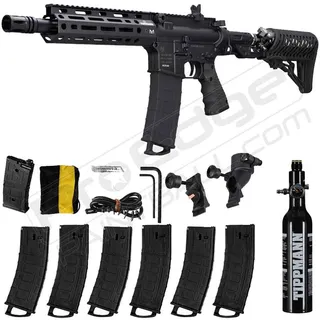
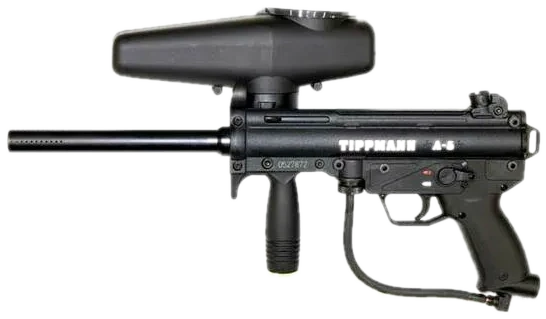
The rental-counter standard. Split-receiver blowbacks with the deepest parts and upgrade catalog in the sport.
Best for: Woodsball, scenario and anyone who wants parts everywhere.
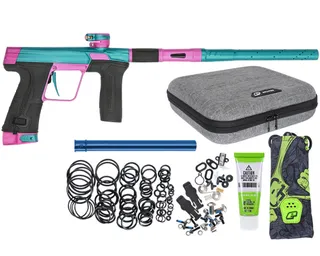
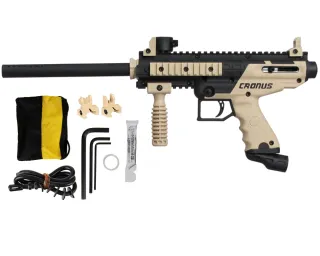
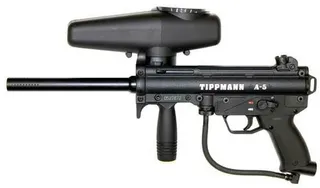
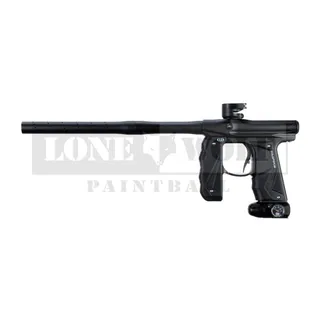
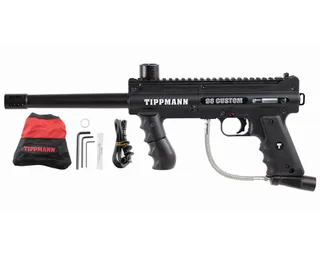
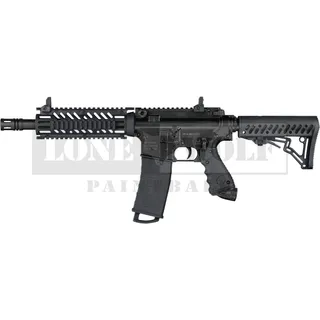
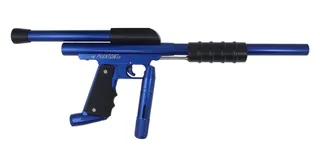

Mechanical paintball guns are the backbone of the sport. Tough, simple, and endlessly forgiving. Instead of a circuit board and solenoid, a mechanical marker uses spring tension and the firing gas itself to cycle, most commonly in an inline blowback design. With no electronics to fail, there's simply less to go wrong, which is exactly why these markers fill rental racks, anchor beginner recommendations, and earn lifelong loyalty from woodsball and rec players.
Three brands make most of the mechanical markers worth owning. Pick a platform, then compare the models inside it.
The rental-counter standard. Split-receiver blowbacks with the deepest parts and upgrade catalog in the sport.
Best for: Woodsball, scenario and anyone who wants parts everywhere.

Kingman's budget blowbacks. Light, simple and among the cheapest brand-new guns that still shoot well.
Best for: Tight budgets and casual rec play.

Clean, lightweight mechanical semi-autos that strip down in minutes and punch above their price.
Best for: New players who value easy cleaning.

The entry mechanical markers we point first-time buyers to, with the money saved going toward a mask and air.
Best for: First-time buyers.

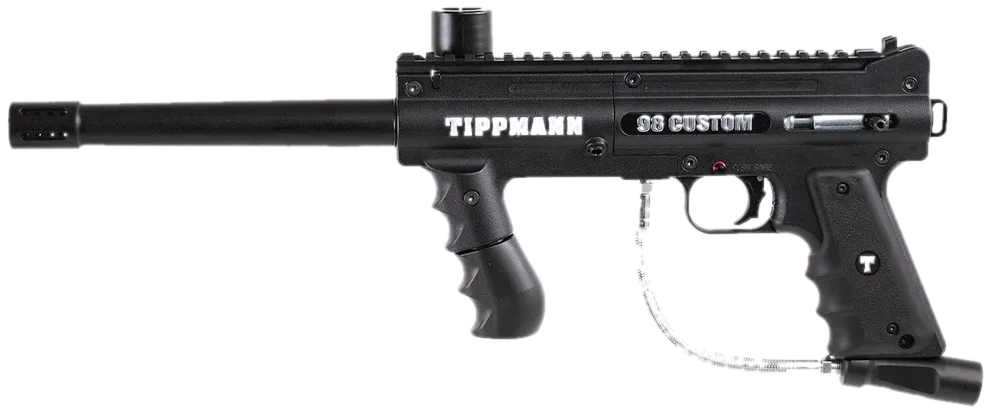
Best overall mechanical: Two decades as the workhorse of the sport: a split-receiver blowback with an Anti-Chop bolt and a vast aftermarket.
Budget
woodsball, scenario
$110 to 160

Best for woodsball: The Cyclone Feed System advances paint in time with the bolt, so it feeds fast with no battery. Very durable, deep accessory catalog.
Budget
woodsball, scenario
$170 to 230
Best value: Tank-tough inline blowback that runs on CO2 or HPA, uses cheap common parts and shrugs off abuse.
Budget
woodsball, rec
$60 to 110

Best speedball ergonomics: A speedball body and the self-cleaning Freeflow bolt at an entry price. Low pressure and gentle on paint.
Budget
rec, woodsball, speedball
$150 to 200
Best milsim on a budget: Shroud, rails and a tactical look for far less than the Tippmann tactical line.
Budget
woodsball, scenario
$90 to 130

Lightest: Tippmann internals in a sleek polymer shell, aimed at first buyers who want lighter handling than the Cronus.
Budget
rec, woodsball
$100 to 140
The default first-gun recommendation: a tank-tough inline blowback semi-auto that runs on CO2 or HPA and shrugs off abuse.
Budget
woodsball, rec
$60 to 110

The Cronus Basic with a milsim shell: collapsible stock, barrel shroud and extra rails for a carbine look without changing the reliable internals.
Budget
woodsball, scenario
$80 to 130
The genre's workhorse for two decades: a split-receiver blowback with an Anti-Chop Technology bolt and a vast aftermarket and field-rental footprint.
Budget
woodsball, scenario
$110 to 160
The 98's bigger sibling, defined by its Cyclone Feed System that mechanically advances paint in time with the bolt for high mechanical feed rates without a battery.
Budget
woodsball, scenario
$170 to 230

A 98-platform gun dressed as an M4-style carbine; still widely circulated secondhand as a budget milsim starter.
BudgetDiscontinued
woodsball, scenario
$70 to 120 USED
Tippmann's lightweight entry semi-auto in a sleek polymer shell, aimed at first buyers who want lighter handling than the Cronus.
Budget
rec, woodsball
$100 to 140

A budget AR-15-styled semi-auto with a full carbine shell, targeting the airsoft-to-paintball crossover crowd.
Budget
woodsball, scenario
$120 to 160

Kingman's long-running budget blowback, one of the cheapest brand-new guns that still shoots respectably out of the box.
Budget
rec, woodsball
$55 to 90
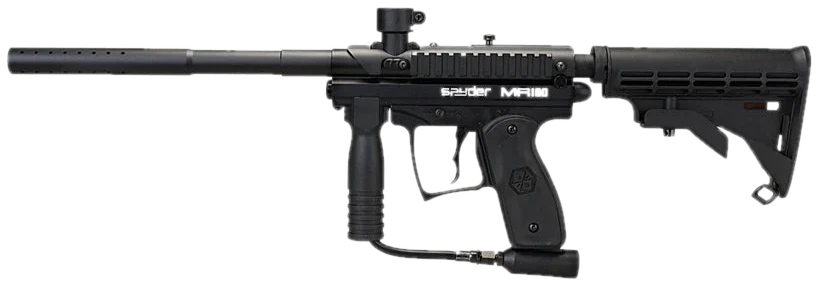
Spyder's milsim-styled blowback with a shroud and rails, a budget alternative to the Tippmann tactical line.
Budget
woodsball, scenario
$90 to 130
A clean, lightweight mechanical semi-auto that punches above its price for new players who want simple and reliable.
Budget
rec, woodsball
$90 to 120
A mechanical gun with a speedball body and the famous self-cleaning Freeflow bolt, bridging entry mechanical and tournament ergonomics.
Budget
rec, woodsball, speedball
$150 to 200

A budget milsim carbine on a blowback platform, often sold as a full ready-to-play package.
Budget
woodsball, scenario
$100 to 160

A rugged milsim blowback from Empire's Battle Tested line, common on the used market for scenario players.
BudgetDiscontinued
woodsball, scenario
$70 to 130 USED

The Cronus bundled as a ready-to-play kit (mask, hopper, tank), the most common all-in-one first purchase at fields and big-box stores.
Budget
woodsball, rec
$150 to 230
The non-ACT base 98: the simplest, cheapest version of the most-rented gun in paintball history.
Budget
woodsball, rec
$85 to 130

A simple, light Spyder blowback aimed at the lowest price point for casual and family rec play.
Budget
rec, woodsball
$50 to 80

The predecessor to the Kaos 3, a clean budget blowback still common on the used market.
BudgetDiscontinued
rec, woodsball
$60 to 100 USED

A milsim blowback carbine from Empire's Battle Tested line, common secondhand for budget scenario players.
BudgetDiscontinued
woodsball, scenario
$70 to 140 USED

An iconic 1990s/2000s budget gun that introduced a generation to paintball; collected for nostalgia rather than performance.
BudgetLegacy
rec
$20 to 60 USED

An AR-styled budget carbine in the Stryker line, sold as a complete tactical package for new milsim players.
Budget
woodsball, scenario
$100 to 150

A US Army-branded 98-platform carbine, common on the used market as a budget milsim starter.
BudgetDiscontinued
woodsball, scenario
$70 to 120 USED

A Spyder electro-mechanical hybrid with selectable modes, bridging budget mechanical and electronic play.
BudgetDiscontinued
rec, woodsball
$80 to 140 USED
Inline blowback semi-autos are the classic first paintball gun: spring and air pressure cycle the bolt, with no electronics anywhere. They are tough, cheap to run, and easy to fix in the field, which is why fields trust them as rentals. They run on CO2 or HPA and use widely available parts.
Many woodsball players favor rugged mechanical markers, often with milsim styling, that take a beating in natural terrain without complaint. Reliability and parts availability matter more than rate of fire out in the trees, and a mechanical gun's simplicity is a real advantage on a long scenario day.
Some mechanical markers sit on popular platforms with healthy aftermarkets, letting you fit a better barrel, trigger, or spring kit as you go. This gives a player room to grow without buying a whole new gun, though it's worth remembering that many blowbacks run best left stock.
Mechanical markers are where modern paintball found its footing. After the single-shot pump pistols of the sport's earliest days, the semi-automatic blowback design democratized the game in the 1990s by giving players a marker that fired with each pull of the trigger and cost little to buy or run. Decades later, the basic blowback is still going strong, because the qualities that made it popular, toughness, simplicity, and low cost, never went out of style. It remains the marker most likely to be in a new player's hands.
The blowback mechanism is elegantly simple. Air pressure and a spring hold the bolt and hammer in tension; pulling the trigger releases the hammer to strike a valve, which sends a burst of gas to fire the ball and, at the same time, drive the bolt back to re-cock for the next shot. There are no circuit boards, solenoids, or batteries anywhere in the system. That mechanical purity is the source of both the marker's ruggedness and its characteristic louder report and firmer kick compared with an electropneumatic gun.
Air choice is refreshingly flexible with mechanical markers. Most run happily on either CO2 or HPA, which is a real advantage for a new player using whatever a field provides. CO2 is cheaper to fill and stores a lot of energy in a small bottle, though it behaves unpredictably in cold weather or rapid fire. HPA delivers steadier pressure and is the better long-term choice as you play more seriously. Buying a marker that accepts both keeps your options open and means you're never stranded at the fill station.
Reliability is the mechanical marker's defining virtue. With so few parts and nothing electronic to fail, the worst that usually happens is a worn o-ring or detent, both of which cost pennies and swap out in minutes. This is precisely why fields equip their rental racks with mechanical guns and why they're the standard recommendation for beginners: they survive dirt, drops, and inexperience far better than a precision tournament marker, and they keep running when conditions turn rough. For woodsball and scenario play, that resilience is worth more than any rate-of-fire number.
There's an upgrade story too, though it deserves a clear-eyed view. Popular mechanical platforms enjoy healthy aftermarkets, better barrels, smoother triggers, lighter springs, that let a player improve a gun gradually rather than replacing it. At the same time, many blowbacks shoot their best when left close to stock, and pouring money into a budget marker often makes less sense than saving toward an entry electro. The smart move is to choose a popular platform from the outset if you think you'll want to tinker.
Maintenance keeps a mechanical marker running for years and could hardly be simpler. Wipe the gun down after each outing, periodically inspect and lightly oil the o-rings with paintball-safe lubricant, and replace any seal that looks worn before it lets you down. A tiny field kit, a couple of spare o-rings, a barrel swab, and the one tool your gun needs, handles nearly every issue without leaving the game. This forgiving nature is a big reason mechanical guns are so beloved by players who'd rather shoot than fettle.
When you're choosing one, weigh reliability, parts availability, air compatibility, and total cost against how you actually intend to play. Be honest about whether you're a casual rec player, a budget-minded beginner, or a dedicated woodsballer, because each is well served by a slightly different mechanical marker. Use the comparison table and type breakdowns above to narrow the field, then open the individual gun resource pages from the grid for the verified specifications and pricing guidance that will finalize your choice.
 Beginner Paintball Guns. Forgiving, affordable first markers with real entry-level options.Electronic Paintball Guns. Board-driven electropneumatic markers for higher, smoother rates of fire.Woodsball Paintball Guns. Durable markers built for outdoor, scenario, and milsim-style play.Best Mechanical Paintball Guns. The toughest, simplest blowback markers.Best Cheap Paintball Guns. Top value picks when budget is the priority.Paintball Marker Parts. O-rings, seals, detents, and upgrade kits that keep your gun running like new.Paintball Guns & Markers. Every marker in our database with buying guidance by type, skill, and budget.