











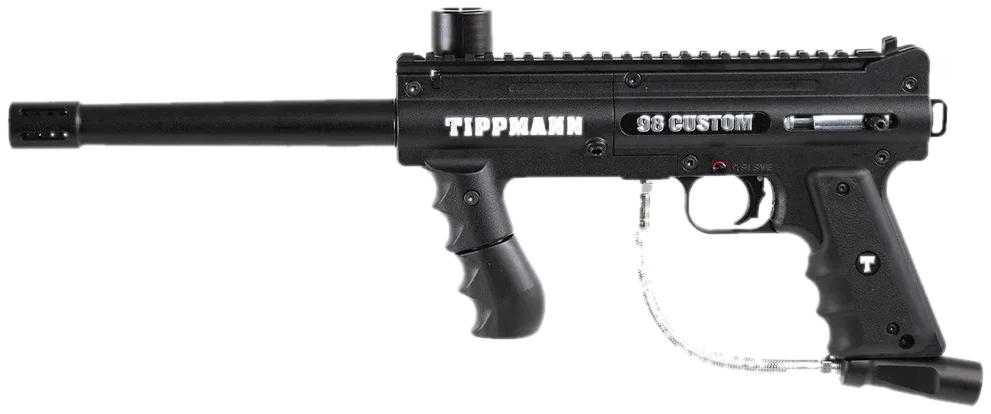

Rec ball
Walk-on games at the local field. Simple, forgiving markers that run on the CO2 or HPA the field hands you.
Best for: Casual first-timers.
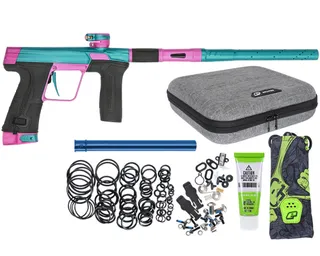
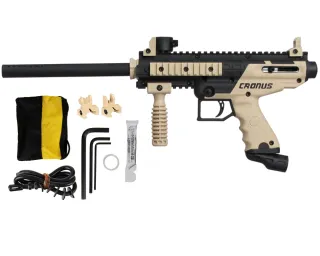
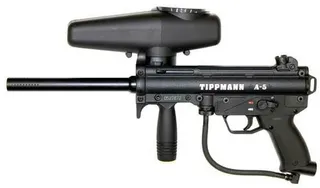
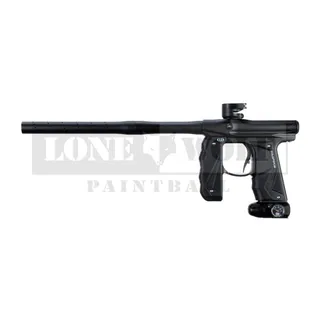
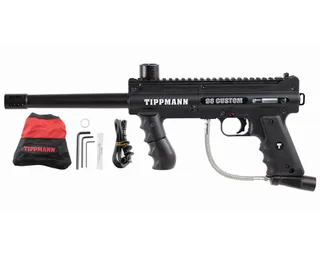
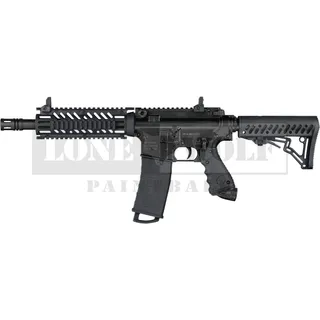
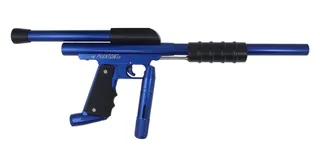

Beginner paintball guns are the category every new player should start with: forgiving, affordable markers that let you learn the sport without breaking down or breaking the bank. This page is the category home for entry-level markers, distinct from our curated collection of expert beginner picks, and it focuses on what makes a gun genuinely beginner-friendly and how to choose one that grows with you through your first season and beyond.
Where you play decides what to buy. Pick the style closest to your first few games.
Walk-on games at the local field. Simple, forgiving markers that run on the CO2 or HPA the field hands you.
Best for: Casual first-timers.

Outdoor play in the trees. Tough blowbacks with parts you can find anywhere.
Best for: Players starting outdoors.

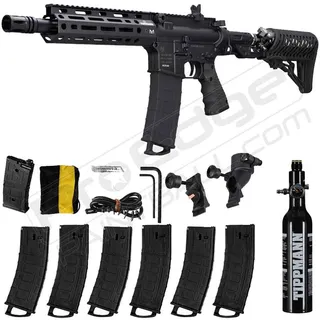
AR-styled carbines and tactical shells on the same reliable internals, for players who want the milsim look from day one.
Best for: Airsoft crossovers and milsim fans.

Light, low-pressure markers and lower-impact options for kids and smaller players.
Best for: Families and youth players.
Best overall first marker: The default first-gun recommendation: a tank-tough inline blowback that runs on CO2 or HPA and shrugs off abuse.
Budget
woodsball, rec
$60 to 110
Best budget pick: One of the cheapest brand-new guns that still shoots respectably out of the box.
Budget
rec, woodsball
$55 to 90

Best upgrade-ready pick: A massive parts and upgrade catalog on the most-rented platform in the sport, so it grows with you.
Budget
woodsball, scenario
$110 to 160

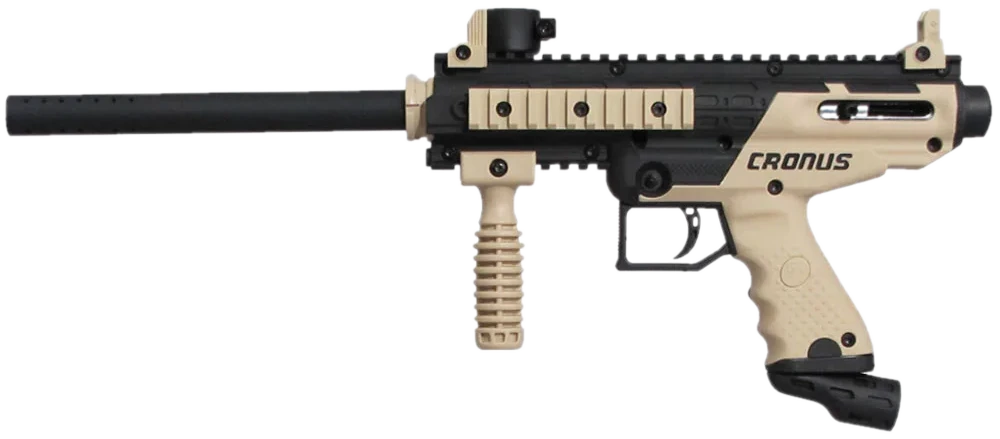
Best all-in-one package: The Cronus bundled with a mask, hopper and tank. The most common first purchase at fields and big-box stores.
Budget
woodsball, rec
$150 to 230

Best for smaller players: Tippmann internals in a light, compact polymer shell with beginner-friendly ergonomics.
Budget
rec, woodsball
$100 to 140

Best first electronic: A budget electronic blowback with selectable firing modes, for players who want modes without a big spend.
Budget
rec, woodsball
$140 to 190
The default first-gun recommendation: a tank-tough inline blowback semi-auto that runs on CO2 or HPA and shrugs off abuse.
Budget
woodsball, rec
$60 to 110

The Cronus Basic with a milsim shell: collapsible stock, barrel shroud and extra rails for a carbine look without changing the reliable internals.
Budget
woodsball, scenario
$80 to 130
The genre's workhorse for two decades: a split-receiver blowback with an Anti-Chop Technology bolt and a vast aftermarket and field-rental footprint.
Budget
woodsball, scenario
$110 to 160

The 98's bigger sibling, defined by its Cyclone Feed System that mechanically advances paint in time with the bolt for high mechanical feed rates without a battery.
Budget
woodsball, scenario
$170 to 230

A 98-platform gun dressed as an M4-style carbine; still widely circulated secondhand as a budget milsim starter.
BudgetDiscontinued
woodsball, scenario
$70 to 120 USED
Tippmann's lightweight entry semi-auto in a sleek polymer shell, aimed at first buyers who want lighter handling than the Cronus.
Budget
rec, woodsball
$100 to 140

A budget AR-15-styled semi-auto with a full carbine shell, targeting the airsoft-to-paintball crossover crowd.
Budget
woodsball, scenario
$120 to 160
Kingman's long-running budget blowback, one of the cheapest brand-new guns that still shoots respectably out of the box.
Budget
rec, woodsball
$55 to 90

Spyder's milsim-styled blowback with a shroud and rails, a budget alternative to the Tippmann tactical line.
Budget
woodsball, scenario
$90 to 130

A clean, lightweight mechanical semi-auto that punches above its price for new players who want simple and reliable.
Budget
rec, woodsball
$90 to 120

A mechanical gun with a speedball body and the famous self-cleaning Freeflow bolt, bridging entry mechanical and tournament ergonomics.
Budget
rec, woodsball, speedball
$150 to 200

A budget milsim carbine on a blowback platform, often sold as a full ready-to-play package.
Budget
woodsball, scenario
$100 to 160

A rugged milsim blowback from Empire's Battle Tested line, common on the used market for scenario players.
BudgetDiscontinued
woodsball, scenario
$70 to 130 USED
The Cronus bundled as a ready-to-play kit (mask, hopper, tank), the most common all-in-one first purchase at fields and big-box stores.
Budget
woodsball, rec
$150 to 230
The non-ACT base 98: the simplest, cheapest version of the most-rented gun in paintball history.
Budget
woodsball, rec
$85 to 130

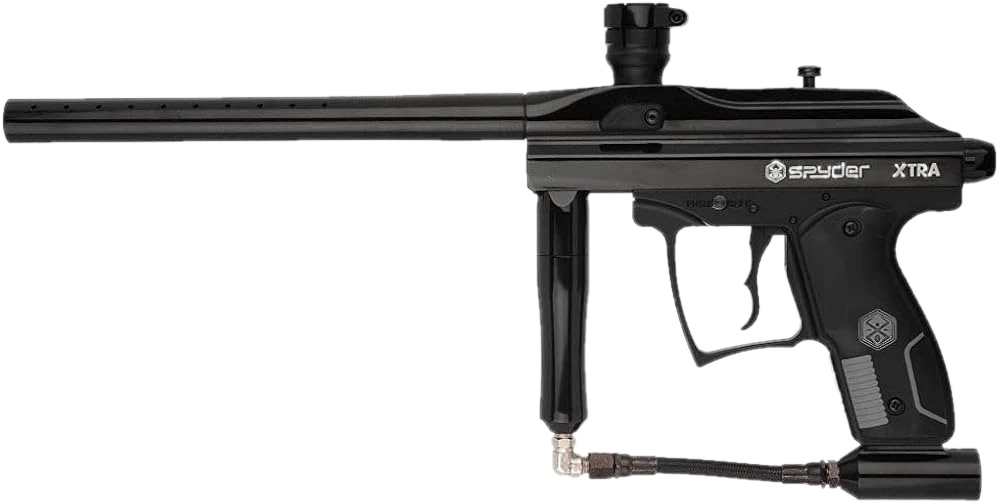
A simple, light Spyder blowback aimed at the lowest price point for casual and family rec play.
Budget
rec, woodsball
$50 to 80

The predecessor to the Kaos 3, a clean budget blowback still common on the used market.
BudgetDiscontinued
rec, woodsball
$60 to 100 USED

A milsim blowback carbine from Empire's Battle Tested line, common secondhand for budget scenario players.
BudgetDiscontinued
woodsball, scenario
$70 to 140 USED

An iconic 1990s/2000s budget gun that introduced a generation to paintball; collected for nostalgia rather than performance.
BudgetLegacy
rec
$20 to 60 USED
An AR-styled budget carbine in the Stryker line, sold as a complete tactical package for new milsim players.
Budget
woodsball, scenario
$100 to 150

A US Army-branded 98-platform carbine, common on the used market as a budget milsim starter.
BudgetDiscontinued
woodsball, scenario
$70 to 120 USED

A Spyder electro-mechanical hybrid with selectable modes, bridging budget mechanical and electronic play.
BudgetDiscontinued
rec, woodsball
$80 to 140 USED
Inline blowback semi-autos are the heart of the beginner category: tough, simple guns with no electronics, common parts, and easy field maintenance. They run on HPA or CO2 and survive the learning curve and rental abuse alike, which is why they're the standard recommendation for a first marker.
Some entry markers sit on popular platforms with healthy aftermarkets, letting a new player add a better barrel or trigger as their skills grow rather than buying a whole new gun. This is a smart choice if you suspect you'll want to specialize once you discover the style of play you enjoy.
Lighter, low-recoil, easy-to-handle markers suit younger or smaller players, with simplicity and comfort taking priority. Supervision, a properly fitting mask, and field age rules matter even more than the gun here, so the focus is on a marker that's easy and safe to use.
Starting out in paintball is exciting, but the sheer number of markers and accessories can make a first purchase feel daunting. The reassuring truth is that the right answer for most beginners is well established: a dependable entry-level mechanical marker, paired with the safety gear and air you genuinely can't cut corners on. This category exists to help you browse those entry-level guns and understand what separates a beginner-friendly marker from one that will frustrate you, so your first season is about fun rather than fuss.
Mechanical blowback markers dominate the beginner category for good reason. With no circuit board, solenoid, or battery, there is simply less to go wrong, and what does go wrong is usually a worn o-ring you can swap in the field for pocket change. These guns tolerate dirt, drops, and inexperience far better than precision tournament markers, which is exactly why fields trust them as rentals. That ruggedness is worth more to a beginner than any rate-of-fire figure on a spec sheet.
Air choice is a common source of confusion for newcomers. Compressed HPA delivers consistent pressure shot after shot and across temperatures, which is why experienced players prefer it, while CO2 is cheaper to fill and works fine in many entry markers. The practical move is to buy a gun that accepts both, start with whatever your local field offers, and lean toward HPA as you get more serious. Avoid pairing CO2 with markers that specifically want stable air.
It's worth being clear about how this page differs from our curated beginners collection. This is the category page. A broad home for entry-level markers where you can explore the full range in our database. The best beginner guns collection, by contrast, is a focused shortlist of expert picks with targeted recommendations for different budgets and needs. Many players use this category to browse widely and the collection to make a quicker, guided decision; both point you to the same real markers with verified specs.
The single most important purchase isn't the gun at all. It's the mask. A quality thermal-lensed goggle system prevents fogging so you can actually see, and it protects the part of you that matters most. Never trade mask quality for a fancier marker. After the mask, a reliable loader keeps your gun fed without jamming, and a properly sized air tank rounds out a setup that just works. Paint quality and barrel match will do more for your accuracy than almost anything else on the field.
Maintenance for a beginner marker is genuinely easy and pays for itself in reliability. Build a simple habit: wipe the gun down after each outing, periodically inspect and lightly lubricate the o-rings with paintball-safe oil, and replace any seal that looks worn before it fails. Carry a tiny field kit, a couple of spare o-rings, a barrel swab, and the one tool your gun needs, and you'll handle the vast majority of issues without leaving the game.
Finally, think in terms of a complete system and a realistic budget. Add up the gun, mask, tank, loader, and a case of paint before you commit, and resist the temptation to spend the whole budget on the marker. The grid above shows the real entry-level markers in our database; compare them, follow through to the individual resource pages for verified specs and pricing guidance, and choose the one whose total cost and parts support fit how you plan to play.
 Best Paintball Guns for Beginners. Expert beginner picks, mistakes to avoid, and real entry-level markers.Mechanical Paintball Guns. Tough, simple blowback markers. The backbone of rec and beginner play.Best Cheap Paintball Guns. Top value picks when budget is the priority.Best Paintball Guns for Kids. Light, low-recoil, easy-to-use markers for younger players.
 Paintball Masks & Goggles. Protective goggles and thermal lenses. The one piece of gear you can never skimp on.
 HPA Tanks & Air Systems. Compressed-air tanks and regulators that power your marker consistently shot to shot.Paintball Guns & Markers. Every marker in our database with buying guidance by type, skill, and budget.