Browse guns
Collections
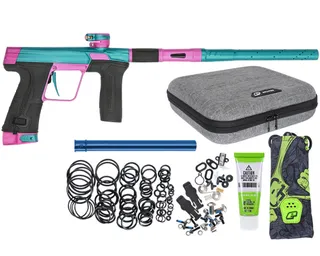
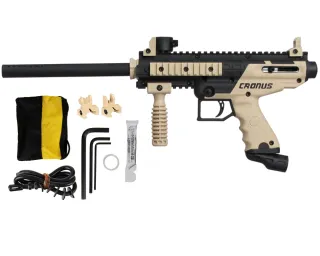
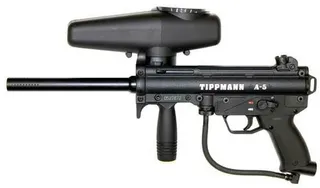












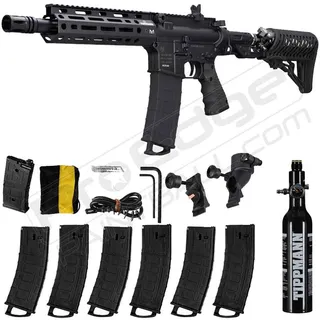
Best Paintball Guns for Beginners
If you're buying your first paintball gun, the goal isn't to find the fanciest marker. It's to find the one that lets you fall in love with the sport without draining your wallet or breaking down mid-game. The best beginner paintball guns are tough, simple, forgiving of mistakes, and cheap to keep running, and they leave room in your budget for the gear that actually keeps you safe and having fun.
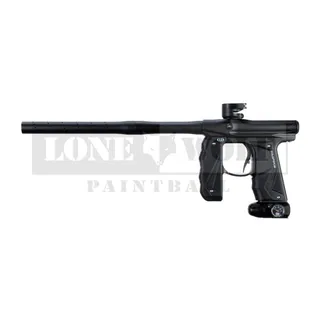
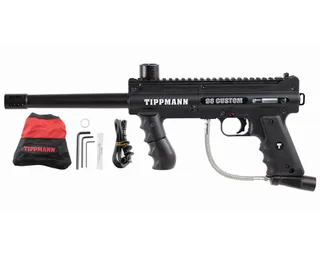
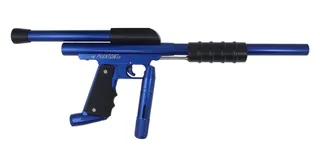
Almost every great first marker is an entry-level mechanical gun: a blowback semi-auto that runs on HPA or CO2, strips down with basic tools, and uses o-rings you can buy anywhere. These guns survive the rental-counter abuse that would retire a delicate tournament marker, and when something does go wrong you can usually fix it in the field for a few dollars. The grid below shows the entry-level mechanical markers in our database. Real guns with real specifications on their own pages.
This guide explains exactly what to look for, the mistakes new players make most often, and how to think about your budget so your money goes where it counts. Everything here is educational guidance. For a specific marker's real specs and pricing, follow through to its resource page.
Think of your first purchase as building a complete kit rather than buying a single gun. The marker, a fog-resistant thermal mask, an air tank, a loader, and a case of paint all work together, and a weakness in any one of them will spoil your day more than a slightly slower trigger ever could. Spend enough on the marker to get proven reliability, then protect your budget for the gear that keeps you safe and comfortable. The product categories below group the real entry-level mechanical markers in our database by how players actually use them, from no-frills rec guns to tactical-styled starters and upgrade-ready platforms, so you can shortlist a few candidates and follow each link to its resource page for verified specifications.
What to Look for in a Beginner Paintball Gun
What to Look For in the Best Paintball Guns for Beginners
- A rugged mechanical (blowback) design with no fragile electronics to fail.
- Compatibility with both HPA and CO2 so you can use whatever your field offers.
- Common, inexpensive o-rings and seals that are easy to source and replace.
- Simple field-stripping with minimal or no tools.
- A reputable brand with a track record at rental counters and a parts supply.
- A price that leaves budget for a quality mask, tank, and loader.
Types Explained
Rugged Entry-Level Mechanical Markers
The classic first paintball gun is a rugged entry-level mechanical marker. These blowback semi-autos cycle on spring and air pressure alone, with no board, solenoid, or battery to fail, so they survive drops, dirt, and the rental-counter abuse that would retire a delicate tournament gun. They run on HPA or CO2, strip down with basic tools, and use common o-rings you can replace for pocket change. You give up rate of fire and refinement, but you gain bulletproof reliability and the lowest cost of ownership in the sport, which is exactly what a new player needs while learning the game.
Tactical and Milsim-Styled Starters
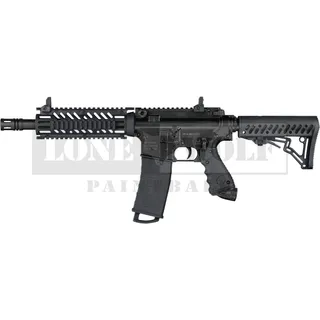
If you like the look and feel of a tactical marker, several entry-level guns wrap proven mechanical internals in milsim styling with rail space for stocks, sights, and foregrips. They are just as tough and easy to maintain as plain entry guns, but they suit players drawn to woodsball and scenario play who want a more realistic loadout from day one. The added rails also give you room to grow the gun over time. Reliability and parts support remain the priorities, so stick to well-known platforms whose accessories and seals are easy to source anywhere.
Upgrade-Ready Beginner Platforms
Some entry markers are popular enough to have deep aftermarket catalogs, which makes them smart picks if you already suspect you will want more performance later. Choosing one of these platforms lets you add a better barrel, a smoother trigger, or a new feed system gradually instead of replacing the whole gun once your skills grow. They keep the toughness and simple maintenance of true beginner guns while leaving the door open to customization. Pair any of them with a quality mask and reliable air, and you have a setup that can evolve with you across several seasons of play.
Expert Recommendations for the Best Paintball Guns for Beginners
What Makes a Great Beginner Gun
A great beginner paintball gun is tough, simple, and cheap to keep running. It uses a mechanical blowback design with no electronics to fail, accepts whatever air your field offers, and relies on common o-rings you can swap in the field for a few dollars. Just as important, it leaves enough of your budget for a quality thermal mask, air, and a loader. Reliability and low cost of ownership matter far more than rate of fire when you are learning, because the marker that keeps shooting is the one that lets you fall in love with the sport.
Best for First-Time Buyers on a Budget
If this is your very first marker and money is tight, prioritize a proven entry-level mechanical gun and a quality mask over any flashy feature. A simple, reliable blowback paired with a fog-resistant thermal goggle system beats a fancier gun with a cheap mask every time. Choose a platform your local field already rents or services so help and spare parts are close at hand, and spend the money you save on the air, loader, and paint that keep your first games fun.
Best for Players Who Plan to Upgrade Later
If you already know you will want more performance as your skills grow, pick a popular entry platform with a healthy aftermarket. That way you can add a better barrel, trigger, or feed system gradually instead of buying a whole new marker. Look for a gun with rail space and widely available parts, learn to maintain it well, and treat your first season as a chance to discover whether speedball, woodsball, or magfed play suits you before you invest in a specialized marker.
Best Paintball Guns for Beginners: Frequently Asked Questions
What is the best paintball gun for a beginner?
How much should a beginner spend on a paintball gun?
Should beginners use CO2 or HPA?
Do I need an electronic paintball gun as a beginner?
What else do I need besides the gun?
Are cheap paintball guns any good?
How hard is it to maintain a beginner paintball gun?
Can a beginner gun keep up at the field?
Will I outgrow a beginner paintball gun?
What's the most common beginner buying mistake?
Is a used paintball gun a good idea for beginners?
What velocity should a beginner gun shoot?
Which beginner paintball gun brands are most trusted?
How often should I clean a beginner paintball gun?
Can kids use a beginner paintball gun?
Everything a Beginner Needs to Know Before Buying
Walking into paintball for the first time can feel overwhelming. There are dozens of markers, a wall of accessories, and plenty of strong opinions online. The good news is that the decision is simpler than it looks. For the overwhelming majority of new players, the right answer is a dependable entry-level mechanical marker, and the rest of your attention belongs on the gear that keeps you safe and comfortable. Get those two things right and you'll have a fantastic first season.
Mechanical markers earn their beginner reputation through sheer dependability. With no circuit board, solenoid, or battery, there's simply less to go wrong, and what does go wrong is usually a worn o-ring you can swap in the field for pocket change. These guns tolerate dirt, drops, and the occasional mistake far better than precision tournament markers, which is exactly why fields trust them as rentals. That toughness is worth more to a beginner than any rate-of-fire figure.
Air choice trips up a lot of newcomers. Compressed HPA gives consistent pressure shot after shot and across temperatures, which is why experienced players prefer it, while CO2 is cheaper to fill and works fine in many entry markers. The practical move is to buy a gun that accepts both, start with whatever your field offers, and lean toward HPA as you get more serious. Avoid pairing CO2 with markers that specifically want stable air.
The single most important purchase isn't the gun at all. It's the mask. A quality thermal-lensed goggle system prevents fogging so you can actually see, and it protects the part of you that matters most. Never trade mask quality for a fancier marker. After the mask, a reliable loader keeps your gun fed without jamming, and a properly sized air tank rounds out a setup that just works. Paint quality and barrel match will do more for your accuracy than almost anything else.
Maintenance for a beginner marker is genuinely easy and pays for itself in reliability. Build a simple habit: wipe the gun down after each outing, periodically inspect and lightly lubricate the o-rings with paintball-safe oil, and replace any seal that looks worn before it fails. Carry a tiny field kit, a couple of spare o-rings, a barrel swab, and the one tool your gun needs, and you'll handle the vast majority of issues without leaving the game.
Finally, think in terms of a complete system and a realistic budget. Add up the gun, mask, tank, loader, and a case of paint before you commit, and resist the temptation to blow the whole budget on the marker. The grid above shows the real entry-level mechanical markers in our database; compare them, follow through to the individual resource pages for verified specs and pricing guidance, and choose the one whose total cost and parts support fit how you plan to play.
It also helps to understand how a blowback marker actually works, because that knowledge takes the mystery out of maintenance. When you pull the trigger, a sear releases a spring-driven bolt and hammer; the hammer strikes a valve that releases a measured burst of air, which both fires the ball and blows the bolt back to recock the gun for the next shot. There is no circuit board, no battery, and no solenoid anywhere in that sequence, which is why so little can go wrong. The only parts that wear in normal use are the o-rings and seals, and those are inexpensive and quick to replace. Once you have stripped and reassembled your marker a couple of times at home, the process becomes second nature, and you will be able to diagnose a leak or a soft shot in minutes on the field rather than packing up for the day.
Finally, resist the pressure to over-buy. Online forums and gear reviews are full of enthusiasts who love expensive markers, and it is easy to convince yourself that you need a high-end gun to keep up. In reality, fields and leagues cap rate of fire for fairness, paint and barrel match do more for accuracy than the marker itself, and positioning and communication win far more games than raw firepower. A reliable entry-level mechanical gun shooting fresh, well-matched paint performs right alongside markers costing several times as much. Buy a proven platform, learn it inside and out, invest in a comfortable mask and consistent air, and give yourself a full season to discover how you like to play. When you genuinely outgrow your first gun, you will know exactly what to upgrade to and why, and your first marker can become a trusted backup or loaner for the friends you bring into the sport. Ultimately, the best first marker is simply the one that keeps you on the field, learning and laughing, week after week, and almost any proven entry-level mechanical gun in the categories above can do exactly that when it is paired with a good mask and a steady supply of air.
Related Categories
- Beginner Paintball Guns. The full beginner category with buying guidance and real entry-level markers.
- Best Cheap Paintball Guns. Top value picks when budget is the priority.
- Mechanical Paintball Guns. Tough, simple blowback markers. The backbone of beginner play.
- Paintball Masks. Protective goggles and thermal lenses. The one piece of gear you can never skimp on.
- HPA Tanks & Air Systems. Compressed-air tanks and regulators that power your marker consistently shot to shot.
- Paintballs. How paint grade, fill, and shell brittleness affect accuracy and barrel matching.
- Paintball Loaders & Hoppers. Gravity, agitating, and force-fed loaders that keep your marker eating paint.