Browse guns
Collections













Tippmann Paintball Guns
Built like a tank, ready for anything.
Few brands in paintball are as trusted as Tippmann. Based in Fort Wayne, Indiana, the company built its name on a single, stubborn idea: a paintball gun should keep running no matter what you throw at it. For a generation of rental-field players, woodsballers, and scenario teams, a Tippmann was the gun that simply worked, through mud, rain, and years of abuse, and that reputation for toughness is the heart of everything the brand makes.
What follows is the story of how Tippmann earned that workhorse reputation: the unusual heritage it came from, the guns that defined it, the feed system it invented, and the design philosophy that still shapes its lineup today.
The Tippmann Story
Pre-paintball - A machine-gun heritage
Before it ever made a paintball gun, the Tippmann family business was known for building replica and half-scale working machine guns. That background in rugged, precise, function-first engineering shaped how Dennis Tippmann Sr. approached the sport when the company pivoted to paintball, and it explains the durable, mechanical character that runs through the brand to this day.
Mid-1980s - The pivot to paintball
Tippmann turned its attention to the young sport of paintball in the mid-1980s, applying the same toughness-first mindset to a new kind of product. From the start the goal was a gun that field owners and casual players could rely on, not a delicate piece of competition equipment, and that focus set the brand apart early.
Late 1990s - The 98 Custom workhorse
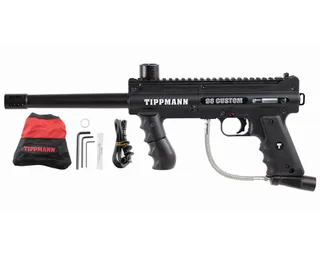
The 98 Custom became Tippmann's defining gun, a long-running inline blowback platform that turned up on rental counters and woodsball fields everywhere. Simple to service, easy to upgrade, and almost impossible to kill, it built an enormous aftermarket and remains one of the most recognisable guns the sport has ever produced.
2000s - The A-5 and the Cyclone Feed System
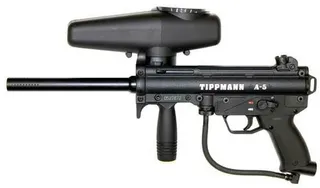
With the A-5, Tippmann introduced the Cyclone Feed System, an air-powered force-feed loader driven by the gun's own firing cycle that needs no batteries. It was a genuinely clever piece of engineering that kept paint feeding reliably in tough conditions, and it became a signature Tippmann feature carried across later platforms.
2000s - Licensed guns and the X7
Tippmann broadened its woodsball and milsim appeal with US Army-licensed guns such as the Carver One and Project Salvo, and pushed its platform forward with the X7 and later the X7 Phenom. These guns leaned into tactical styling and the brand's massive upgrade ecosystem of stocks, sights, and accessories.
2010s: today - Magfed, milsim, and the Cronus
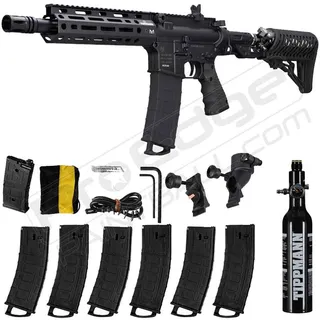
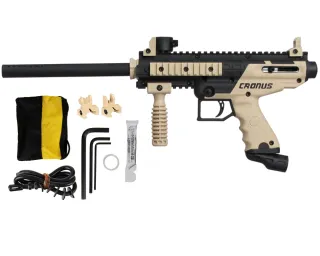
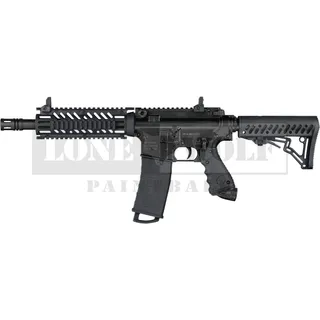
More recent guns broadened the range further: the magfed TMC and Stormer for tactical play, the affordable Cronus for milsim newcomers, and the TiPX and TCR pistols for sidearm and close-quarters use. Across the lineup, the brand kept its core promise of rugged, field-serviceable guns that just keep running.
How Tippmann thinks about a gun
Tippmann designs around reliability before anything else. The guns favour rugged inline blowback mechanics, simple operation, and field-serviceability, so a player can strip a gun down, sort a problem, and get back into the game without specialist tools. That dependability in any weather and any conditions is the trait the whole brand is built on, and it is why Tippmanns dominate rental fields and scenario games.
The other half of the philosophy is longevity through upgradeability. Innovations like the Cyclone Feed System and the Response Trigger added capability without sacrificing toughness, and a huge milsim and woodsball aftermarket lets owners grow a gun over years rather than replace it. A Tippmann is meant to be bought once, abused happily, and kept running for a long time.
What Players Say About Tippmann Paintball Guns
Player and community discussion about Tippmann Paintball Guns is summarised on the live page.
How to Choose a Tippmann Paintball Gun
What to Look For in Tippmann Paintball Guns
- The style of play you favour, woodsball, scenario, milsim, or general rec, since Tippmann offers platforms tuned toward each.
- Whether you want a classic hopper-fed mechanical marker or a magfed-capable tactical platform.
- Build materials and overall durability, which is Tippmann's core strength.
- Aftermarket support: stocks, barrels, response triggers, and tactical kits are abundant for the popular platforms.
- Ease of field-stripping and how cheap and common the o-rings and seals are.
- Air compatibility (HPA or CO2) and what your local field supplies.
- Total cost once you add a mask, tank, loader, and any tactical accessories you want.
Expert Recommendations for Tippmann Paintball Guns
Best for First-Time Buyers
A simple Tippmann mechanical marker is one of the safest first 'serious' purchases in paintball. It shrugs off the mistakes new players make, uses common parts, and holds its value well, so you can play hard and learn without worrying about breaking something delicate.
Best for Woodsball and Scenario
Tippmann's durability is tailor-made for outdoor play in mud, rain, and rough terrain. Look at the rugged platforms with strong tactical aftermarket support so you can add stocks, barrels, and accessories as your loadout evolves.
Best for Milsim and Magfed
If you want a realistic, magazine-fed tactical experience, focus on Tippmann's magfed-capable platforms. They deliver the milsim feel many scenario players crave while keeping the brand's hallmark reliability and parts support.
Tippmann Paintball Guns: Frequently Asked Questions
Are Tippmann paintball guns good for beginners?
What is Tippmann known for?
Are Tippmann guns good for woodsball?
Do Tippmann paintball guns use HPA or CO2?
Are Tippmann markers easy to maintain?
Can you upgrade a Tippmann paintball gun?
Does Tippmann make magfed paintball guns?
Are Tippmann paintball guns good for tournaments?
How long do Tippmann paintball guns last?
Are Tippmann guns worth the money?
Everything You Need to Know About Tippmann Paintball Guns
Tippmann has spent decades earning a reputation as one of the toughest brands in paintball, and that reputation rests on a clear design philosophy: build markers that keep working no matter what the field throws at them. While other manufacturers chase the lightest tournament guns or the highest rates of fire, Tippmann has consistently prioritised durability, simplicity, and serviceability. The qualities that matter most to the players who spend their weekends in the woods rather than on an inflatable speedball course.
The brand's most recognisable platforms have introduced enormous numbers of people to the sport. Names like the 98 Custom, the Cronus, and the TMC are familiar to players across the world, and they share a family resemblance: rugged mechanical internals, straightforward field-stripping, common and inexpensive parts, and a vast aftermarket. That last point matters more than newcomers realise. A marker with strong parts and accessory support is one you can keep running and keep personalising for years, rather than one you outgrow or struggle to repair.
Tippmann's wheelhouse is real-world, outdoor play. Woodsball, scenario games, and milsim formats reward markers that survive mud, rain, and rough handling, and they place a premium on parts you can find anywhere. Tippmann's mechanical platforms excel here, and the brand's magfed-capable options extend that strength into tactical, magazine-fed play for those who want a more realistic, capped-shot experience. This is the opposite end of the spectrum from speedball, and Tippmann has never pretended otherwise. It knows its players and builds for them.
Air compatibility is part of the appeal. Many Tippmann mechanical markers can run on either HPA or CO2, giving players flexibility depending on what their local field offers. HPA remains the more consistent choice across temperatures and is worth budgeting for if you play in the cold or want steadier shot-to-shot performance, but the option to run CO2 keeps running costs low for casual players. As always, the precise requirements for any given model live on its own resource page rather than being generalised here.
Maintenance is where Tippmann's design philosophy pays off. Even the toughest marker benefits from periodic care, and Tippmann's platforms make that easy: they strip down with basic tools, their o-rings and seals are cheap and widely stocked, and a small field kit covers most issues that could otherwise end your day. The brand's reputation for longevity isn't an accident. It's the result of designs that are genuinely simple to keep in good working order.
When you're deciding whether a Tippmann is right for you, be honest about how you play. If you're drawn to competitive speedball and very high rates of fire, a dedicated electropneumatic marker will serve you better. But if you value a gun that's tough, dependable, affordable to run, easy to upgrade, and perfectly suited to woodsball, scenario, milsim, and rec play, Tippmann is hard to beat. Use the grid above to explore the specific Tippmann markers in our database, then dig into each gun's resource page for the real specifications and pricing guidance that will finalise your decision.
Related Categories
- Woodsball Paintball Guns. Durable markers built for outdoor, scenario, and milsim-style play.
- Mechanical Paintball Guns. Tough, simple blowback markers. The backbone of rec and beginner play.
- MagFed Paintball Guns. Magazine-fed markers for tactical, milsim, and scenario play.
- Beginner Paintball Guns. Forgiving, affordable first markers with real entry-level options.
- Best Woodsball Paintball Guns. Durable picks for outdoor and scenario play.
- Paintball Guns & Markers. Every marker in our database with buying guidance by type, skill, and budget.
Today Tippmann sits as one of paintball's most dependable names, a brand whose guns anchor rental fleets, woodsball loadouts, and scenario and milsim setups around the world. Strong parts availability and a deep aftermarket keep older guns shooting and upgradeable long after purchase, which is a big part of why the brand commands such loyalty.
The guns in our database below are the Tippmann platforms we currently track, each with its real specifications and pricing guidance on its own page. We don't publish invented specifications here. Use this story as background, then dive into the individual guns to find the one that fits how you play.