Browse guns
Collections
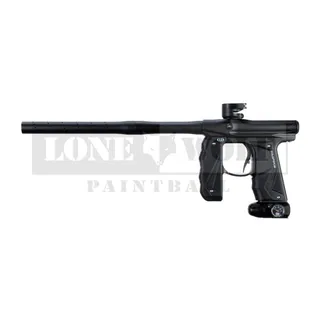
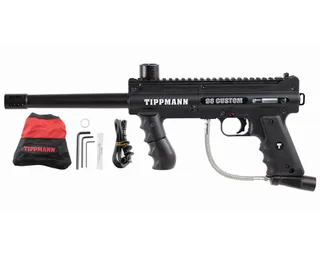
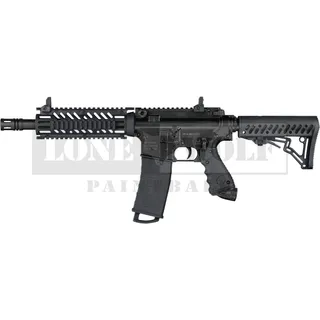
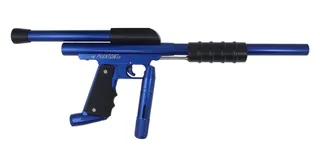













Best Pump Paintball Guns
The best pump paintball guns turn paintball into a marksmanship discipline. By requiring you to manually re-cock the marker between shots, a pump gun caps your rate of fire and rewards patience, positioning, and precision instead of volume. Far from a handicap, that constraint is the whole appeal: pump play is supremely efficient, quiet, and rewarding, and a skilled pump player can hold their own against ramping electronic guns by making every shot count. The grid below shows the pump markers in our database, each with verified specifications on its own resource page.
Pump markers range from simple, affordable platforms ideal for trying the discipline to beautifully machined boutique guns prized by dedicated players and collectors. What they share is mechanical elegance and remarkable air efficiency. A single fill lasts far longer than it would in a semi-auto, and the slower, more deliberate game places a premium on stealth and shot placement. Many fields and events run dedicated pump formats, and some players run pump even in open games for the added challenge.
This guide explains what to prioritise in a pump marker, the mistakes that catch players new to the discipline, and how to think about efficiency, feed, and play style. We don't invent specifications or prices. Where a marker's real numbers exist, you'll find them on that gun's own resource page, reachable from the grid below.
How to Choose the Best Pump Paintball Gun
What to Look For in the Best Pump Paintball Guns
- Smooth, reliable pump action that re-cocks cleanly every stroke.
- Excellent air efficiency. One of the pump's greatest strengths.
- A reliable feed system suited to the slower, deliberate rate of pump play.
- Build quality and machining appropriate to your budget, from simple to boutique.
- Compatibility with HPA (and CO2 where supported) for consistent shots.
- A respected platform with parts support and an active pump community.
- Comfortable ergonomics and a barrel that suits your paint for accuracy.
Expert Recommendations for the Best Pump Paintball Guns
Best for Trying Pump Play
An affordable, reliable pump marker is the ideal way to discover whether the discipline suits you. Focus on a clean pump action and good efficiency rather than machining, and embrace the deliberate pace. Browse the pump markers above to compare real options.
Best for Dedicated Pump Players
If pump becomes your main game, a finely machined boutique platform rewards you with smoothness, reliability, and pride of ownership. These markers are built to be tuned and maintained, and they hold their value in an enthusiast community.
Best for Efficiency and Stealth
Pump markers sip air and shoot quietly, making them superb for stealthy, conservative play. Pair one with a well-matched barrel and fresh paint, and you can run a smaller, lighter air setup while out-shooting players who rely on volume.
Best Pump Paintball Guns: Frequently Asked Questions
What is a pump paintball gun?
Are pump paintball guns good?
Can a pump gun compete against semi-auto markers?
Are pump paintball guns good for beginners?
Why are pump paintball guns so efficient?
What is stock-class paintball?
Do pump paintball guns need HPA or CO2?
How accurate are pump paintball guns?
Are boutique pump guns worth the money?
How do I maintain a pump paintball gun?
Everything You Need to Know About the Best Pump Paintball Guns
Pump paintball is where the sport began and, for a passionate community, where it remains at its purest. Before semi-automatics and electropneumatic boards, every marker was a pump, and players learned to make a small amount of paint and air go a long way. Today pump is a deliberate choice. A discipline embraced by those who want a slower, more thoughtful game built around stealth, patience, and precise shot placement rather than the volume of fire that defines modern speedball.
The defining mechanic is manual re-cocking. After each shot, the player works a sliding pump handle to chamber the next ball and re-cock the action, which means the rate of fire is limited by the player rather than the marker. This sounds like a disadvantage, but it transforms the game: with only one shot ready at a time, every trigger pull matters, and the skills that win are positioning, concealment, timing, and accuracy. For many players, that shift from spraying paint to placing it is what makes pump so compelling.
Efficiency is the pump's standout practical virtue. Because the firing gas isn't spent re-cocking the gun, pump markers use dramatically less air per shot than semi-autos, and the slower pace means far less paint over a game. A single air fill lasts much longer, and players can often run smaller, lighter air setups. Combined with the pump's natural quietness, this efficiency makes pump markers superb tools for stealthy, conservative play where staying hidden and unhurried is an advantage.
Pump markers span a wide range, from affordable, reliable platforms perfect for trying the discipline to exquisitely machined boutique guns that are the pride of dedicated players' collections. There's also stock-class, a traditional format that limits on-gun paint capacity and uses a horizontal feed to recreate paintball's earliest equipment and its purest marksmanship challenge. Whichever route appeals, the pump community is knowledgeable and welcoming, and good platforms hold their value among enthusiasts who appreciate fine mechanical work.
Because every shot counts in pump play, the details that govern accuracy matter even more than usual. Barrel-to-paint match, paint quality and freshness, and consistent air all have an outsized influence on whether your carefully placed shot finds its mark. Pump players tend to be meticulous about these things, matching barrel bore to paint and running quality paint, precisely because they can't rely on a second or third shot to correct a miss. Dialling in this chain is part of mastering the discipline.
Maintenance is straightforward thanks to the pump's mechanical simplicity. The usual routine applies, wipe the marker down, inspect and lubricate o-rings, and replace worn seals before they fail, with the added goal of keeping the pump stroke clean and smooth. With few parts and no electronics, pumps are easy and satisfying to service, and a little regular care keeps the action crisp. Carry a small field kit with spare o-rings and the tools your marker needs, and you'll rarely be caught out.
When you're ready to choose, be honest about your commitment: an affordable, reliable pump is the perfect way to discover whether the discipline suits you, while a boutique platform rewards a dedicated player with smoothness and lasting value. Decide whether a particular format like stock-class appeals, and invest in the barrel-to-paint match that pump play demands. Use the comparison above to narrow the field, then follow through to the individual gun resource pages in the grid for the verified specifications and pricing guidance that will finalise your decision.
Related Categories
- Pump Paintball Guns. Manually cocked markers that reward marksmanship and sip air.
- Mechanical Paintball Guns. Tough, simple blowback markers. The backbone of rec and beginner play.
- CCI Paintball Guns. Browse CCI markers in our database with specs and pricing guidance.
- Inception Designs Paintball Guns. Browse Inception Designs markers in our database with specs and pricing guidance.
- Paintball Barrels. Barrel bore sizing, length, and porting and how they affect efficiency and sound.
- HPA Tanks & Air Systems. Compressed-air tanks and regulators that power your marker consistently shot to shot.