













Frontline
Hopper-fed mechanical markers that run all day and are cheap to fix in the field.
Best for: Volume of fire and reliability over long game days.
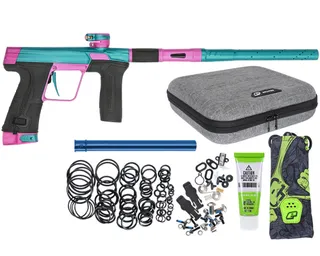
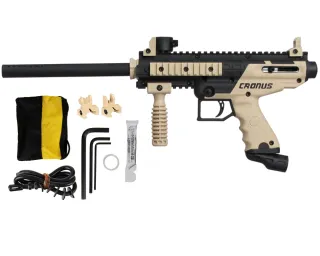
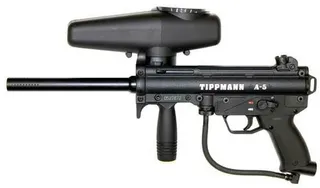
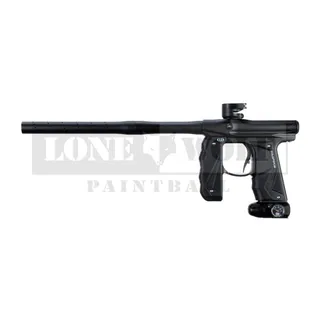
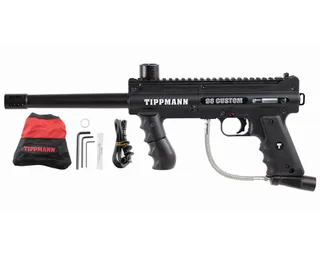
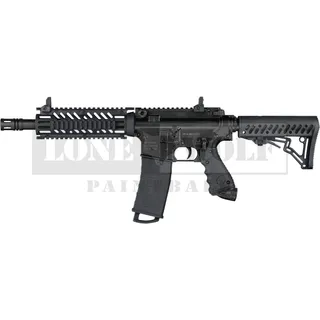
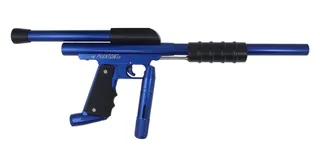

Scenario paintball is the big-game, story-driven side of the sport. Large maps, dozens or hundreds of players, objectives, missions, and events that can run all day or even across a weekend. The markers that thrive in scenario play are versatile and dependable above all, because you may be on the field for hours at a time, far from the staging area, with no chance to swap guns. Reliability, handling, and a loadout suited to long engagements matter more than any single headline spec.
Scenario events reward a loadout built for a role. Pick yours, then compare the markers that fit it.
Hopper-fed mechanical markers that run all day and are cheap to fix in the field.
Best for: Volume of fire and reliability over long game days.

Magazine-fed carbines with realistic controls and First Strike capability for story-driven events.
Best for: Immersion and tactics.

Durable markers that handle terrain, weather and hours of carrying without complaint.
Best for: Terrain-based scenario play.

Backup pistols on 12-gram CO2 and precision marksman platforms for specialist roles.
Best for: Backup and marksman roles.
Best for long game days: Battery-free Cyclone feeding on a very durable platform with a deep accessory catalog.
Budget
woodsball, scenario
$170 to 230
Best for milsim immersion: AR-15 inspired, engineered around First Strike rounds, with authentic controls and top-tier magfed realism.
High-End
scenario, Magfed, milsim
$550 to 700

Best for versatility: Switch between magazines and a hopper on reliable mechanical internals. The go-to entry magfed gun.
Mid-Range
woodsball, scenario, Magfed
$250 to 320

Best budget scenario gun: The Cronus internals in a milsim shell with a collapsible stock, shroud and rails.
Budget
woodsball, scenario
$80 to 130
Best sidearm: The classic magazine-fed backup pistol, running on 12-gram CO2.
Budget
Magfed, scenario, sidearm
$120 to 170

Best for marksman roles: A dedicated sniper platform built for First Strike rounds and long-range precision.
High-End
scenario, Magfed, sniper
$450 to 800
The Cronus Basic with a milsim shell: collapsible stock, barrel shroud and extra rails for a carbine look without changing the reliable internals.
Budget
woodsball, scenario
$80 to 130

The genre's workhorse for two decades: a split-receiver blowback with an Anti-Chop Technology bolt and a vast aftermarket and field-rental footprint.
Budget
woodsball, scenario
$110 to 160
The 98's bigger sibling, defined by its Cyclone Feed System that mechanically advances paint in time with the bolt for high mechanical feed rates without a battery.
Budget
woodsball, scenario
$170 to 230

A 98-platform gun dressed as an M4-style carbine; still widely circulated secondhand as a budget milsim starter.
BudgetDiscontinued
woodsball, scenario
$70 to 120 USED

A budget AR-15-styled semi-auto with a full carbine shell, targeting the airsoft-to-paintball crossover crowd.
Budget
woodsball, scenario
$120 to 160

Spyder's milsim-styled blowback with a shroud and rails, a budget alternative to the Tippmann tactical line.
Budget
woodsball, scenario
$90 to 130

A budget milsim carbine on a blowback platform, often sold as a full ready-to-play package.
Budget
woodsball, scenario
$100 to 160

A rugged milsim blowback from Empire's Battle Tested line, common on the used market for scenario players.
BudgetDiscontinued
woodsball, scenario
$70 to 130 USED

A pump-action carbine built on the EMEK/EMF platform, blending milsim looks with pump play and dual-feed flexibility.
Mid-Range
Pump, woodsball, scenario
$380 to 460

A pump-action magfed pistol designed around First Strike rounds for high-accuracy sidearm and stock-class hybrid play.
Budget
Pump, Magfed, scenario
$140 to 200
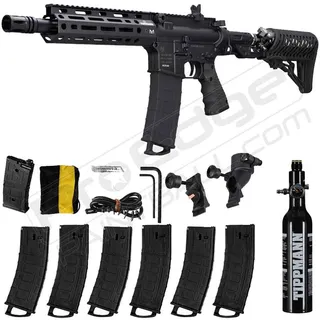
The go-to entry magfed gun: an AR-style dual-feed carbine that switches between magazines and a standard hopper, all on reliable mechanical internals.
Mid-Range
woodsball, scenario, Magfed
$250 to 320

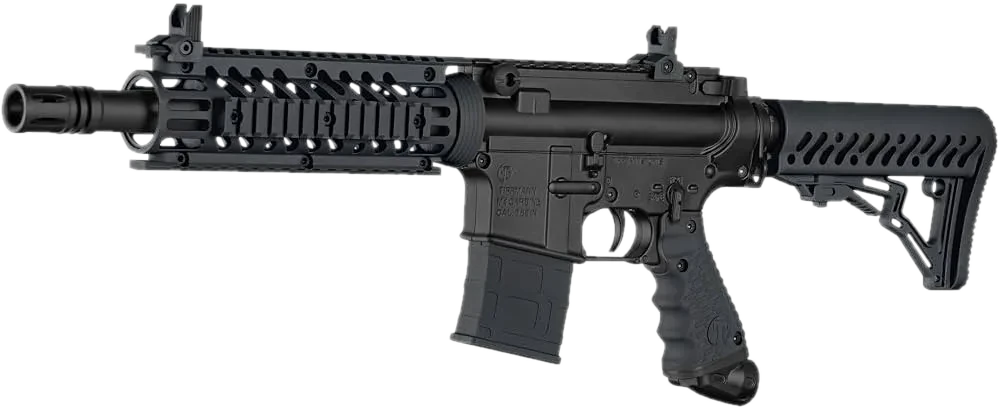
An upgraded TMC with an aluminum receiver, M-LOK handguard and air-thru stock for a more realistic carbine feel and weight balance.
Mid-Range
woodsball, scenario, Magfed
$300 to 380

A cost-effective dual-feed milsim gun with composite body and collapsible stock, a cheaper sibling to the TMC.
Budget
woodsball, scenario, Magfed
$150 to 220
A magazine-fed paintball pistol that runs on 12-gram CO2, the classic backup sidearm for scenario and magfed loadouts.
Budget
Magfed, scenario, sidearm
$120 to 170

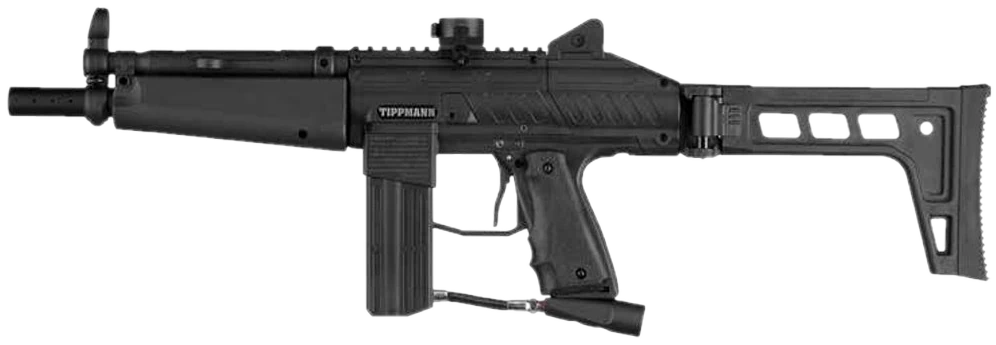
The Tactical Compact Rifle: a TiPX-platform carbine with a folding stock and foregrip for a compact magfed primary or oversized sidearm.
Budget
Magfed, scenario, sidearm
$180 to 250

A versatile milsim platform offered in mechanical and electronic frames with realistic M16/M4-style bodies and magfed conversion options.
Mid-RangeDiscontinued
woodsball, scenario, Magfed
$200 to 400 USED

The magfed version of the beloved EMEK: PE's reliable low-pressure mechanical drivetrain in a milsim magfed package with dual-feed options.
Mid-Range
woodsball, scenario, Magfed
$300 to 380

A milsim magfed gun with a realistic platform and First Strike capability, popular for scenario and tactical play.
Mid-Range
woodsball, scenario, Magfed
$280 to 360
An AR-15-inspired magfed gun engineered around First Strike rounds, offering some of the best out-of-the-box magfed accuracy and realism.
High-End
scenario, Magfed, milsim
$550 to 700

Dye's Assault Matrix: a high-end electronic magfed gun with dual-feed and selectable modes, blending tournament tech with milsim play.
High-EndDiscontinued
scenario, Magfed, milsim
$500 to 900 USED

A dedicated magfed brand building modular, realistic tactical guns with First Strike capability and AR-style controls.
High-End
scenario, Magfed, milsim
$350 to 600
A dedicated paintball sniper platform built for First Strike rounds, offering long-range precision for marksman roles in scenario play.
High-End
scenario, Magfed, sniper
$450 to 800

A milsim blowback carbine from Empire's Battle Tested line, common secondhand for budget scenario players.
BudgetDiscontinued
woodsball, scenario
$70 to 140 USED

An AR-styled budget carbine in the Stryker line, sold as a complete tactical package for new milsim players.
Budget
woodsball, scenario
$100 to 150
A lightweight modern milsim gun with an inline poppet design, M-LOK rails and an adjustable stock for the tactical look at a moderate price.
Mid-Range
woodsball, scenario
$170 to 230

A magfed paintball pistol (evolved from the Tiberius T9) designed around First Strike rounds for accurate sidearm and CQB use.
Mid-Range
Magfed, scenario, sidearm
$160 to 230

The classic Tiberius magfed pistol (now First Strike Hero), foundational to modern magfed and First Strike play.
Mid-RangeLegacy
Magfed, scenario, sidearm
$120 to 220 USED

A dual-feed milsim gun from Empire's Battle Tested line, common secondhand for budget magfed scenario play.
Mid-RangeDiscontinued
woodsball, scenario, Magfed
$120 to 220 USED

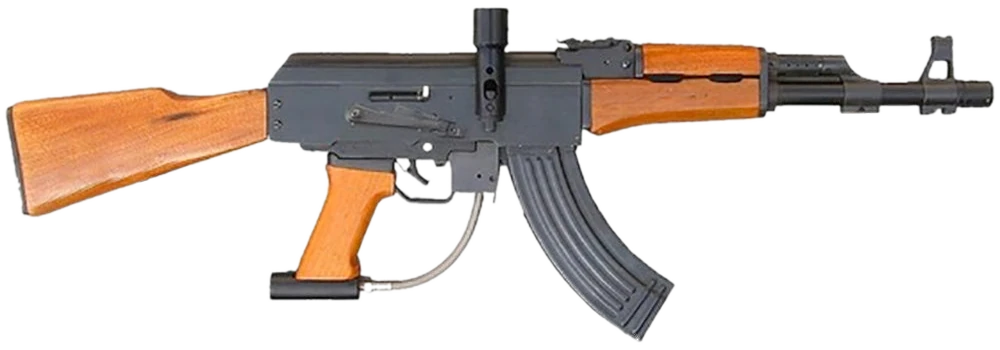
An AK-47-styled magfed kit/gun (often built on a Tippmann core) for players wanting Eastern-bloc rifle aesthetics in scenario play.
Mid-Range
scenario, Magfed, milsim
$250 to 400

A modular magfed gun designed for milsim with realistic controls, magazine feed and an emphasis on customization.
High-End
scenario, Magfed, milsim
$350 to 550

A US Army-branded 98-platform carbine, common on the used market as a budget milsim starter.
BudgetDiscontinued
woodsball, scenario
$70 to 120 USED

A magfed-capable milsim carbine from Valken offering an affordable tactical platform with magazine feed.
Budget
woodsball, scenario, Magfed
$140 to 220
Rugged mechanical markers suit scenario players who value simplicity and toughness over a long day. With nothing electronic to fail and common, cheap parts, they keep running through mud, rain, and hours of play, and many wear milsim styling that fits the big-game atmosphere.
MagFed markers bring tactical immersion to scenario play, capping your shots and rewarding deliberate movement and reloading. They suit milsim-style events and players who prize realism, with first-strike-capable options adding a genuine long-range role for snipers and precision players.
Because scenario play happens in natural terrain, woodsball-ready markers, durable guns built for outdoor abuse, overlap heavily with scenario needs. Whether hopper-fed or magfed, these markers prioritize toughness and handling for the kind of long, varied games scenario events involve.
Scenario paintball is the sport at its most ambitious. Big games built around stories, objectives, and missions, played on large maps by dozens or even hundreds of participants, sometimes over an entire weekend. It draws on the same outdoor terrain as woodsball and borrows heavily from milsim's emphasis on realism and tactics. Because a player may be committed to the field for hours at a stretch, often far from the staging area, the markers that suit scenario play are chosen first and foremost for reliability, handling, and how well they fit a loadout built to last.
There is no single scenario operating system, and the variety is part of the fun. Many players run rugged mechanical markers for simplicity and toughness, trusting that nothing electronic can fail in the mud and rain. Others choose magfed guns for tactical immersion, with the capped magazine feed encouraging deliberate movement and reloading that fits the milsim atmosphere. Some prefer versatile electropneumatic markers configured for outdoor play. The right choice depends on your role and the events you enter, not on any one firing system being best.
Reliability and endurance define a good scenario marker. Over a long game you can't easily swap guns, and you may be a long way from a pro shop or repair table, so a marker that keeps running and that you can fix with a cheap o-ring is invaluable. This is why mechanical and rugged magfed platforms have such strong scenario followings. They shrug off abuse and keep you in the game. A small field-repair kit and a habit of pre-event maintenance go a long way toward a trouble-free day.
Loadout planning is uniquely important in scenario play. Frontline players laying down volume burn through paint and air far faster than tactical magfed players, and the gaps between resupply points can be long. Carrying enough air, paint, pods, or magazines to stay effective between resupplies is a core scenario skill, and many players tailor their entire kit, marker, feed, and carrying gear, to the specific event and role they're taking on. Thinking of the marker as one part of a larger loadout leads to far better results.
Feed style shapes the scenario experience just as it does in woodsball. Hopper-fed markers give a deep, continuous supply suited to frontline and objective-pushing roles, while magfed markers cap your shots and reward the deliberate, tactical play that milsim scenarios are built around. First-strike-capable magfed guns add a genuine long-range option for snipers and precision players, opening up roles that volume-focused setups can't fill. Deciding what role you enjoy is one of the most useful steps before choosing a scenario marker.
Air choice and maintenance underpin a dependable scenario setup. HPA is generally preferred for its consistency across temperatures and over a long day, though many scenario markers also run on CO2, and a larger or backup air supply helps you last between resupplies. Maintenance is straightforward but matters: clean the marker after long or wet games, inspect and lubricate o-rings, and replace worn seals before they fail. Mechanical markers are especially forgiving in these conditions, which is part of their scenario appeal.
Because scenario play is so varied, the right marker is the one that fits your role and the events you join. Rugged simplicity for frontline play, tactical magazine feed for milsim immersion, or a versatile outdoor platform for mixed games. This page has no gun grid of its own; use the type breakdowns and related links above to explore the mechanical, magfed, and woodsball pages where the real markers in our database live, each with verified specifications and pricing guidance on its own resource page.
 Woodsball Paintball Guns. Durable markers built for outdoor, scenario, and milsim-style play.MagFed Paintball Guns. Magazine-fed markers for tactical, milsim, and scenario play.Mechanical Paintball Guns. Tough, simple blowback markers. The backbone of rec and beginner play.
 MagFed Paintball Gear. Magazines, first-strike-capable kits, and tactical accessories for magfed play.Best Woodsball Paintball Guns. Durable picks for outdoor and scenario play.
 Paintball Masks & Goggles. Protective goggles and thermal lenses. The one piece of gear you can never skimp on.Paintball Guns & Markers. Every marker in our database with buying guidance by type, skill, and budget.