Browse guns
Collections











Spyder Hammer 7. Ultimate Guide
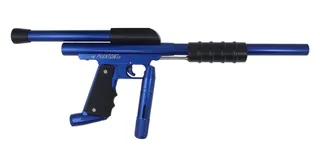
A low-cost pump-action gun styled like a tactical shotgun, aimed at casual pump and rec play.
Spyder Hammer 7 Technical Specifications
| Operation | Pump (blowforward) |
|---|---|
| Firing Modes | pump |
| Caliber | .68 |
| Feed System | Gravity hopper |
| Air Source | HPA/CO2 |
| Operating Pressure | ~300 psi |
| Weight (unloaded) | 2.6 lbs |
| MSRP | $100 |
| Street Price | $90-130 |
| Maintenance | Low |
Notable features: Shotgun-style pump, Affordable, EKO valve
Pros & Cons
Pros
- Very cheap pump
- Fun novelty handling
- Light
Cons
- Lower build tier
- Not stock-class oriented
Best for: Casual pump play, Rec, Budget woodsball
Setup & First-Day Tuning Guide
- Inspect the Pump Stroke. Before adding air, pull the pump handle back fully then push forward. On the Spyder Hammer 7 it should move smoothly. Any roughness means the pump rod needs a coat of Dow 33 grease.
- Check the Ball Detent. Inspect the ball detent that holds rounds in the breech. A worn detent is the #1 cause of ball drops in pump guns. It should offer clear resistance when pressed.
- Dry-Cycle Before Air. With no air and no balls, pump-cycle 10 times to feel the trigger break. Commit to a full pump stroke every rep. Short-stroking is the most common first-day jam and it's technique, not the gun.
- Connect Air & Check Fittings. Thread on your HPA or CO2 tank slowly and listen at all connections for any hissing. The Spyder Hammer 7 runs well on either source. HPA gives more consistent velocity.
- Chronograph to Your Field Limit. Fire 5 shots across the chronograph. Adjust the velocity screw inside the grip frame. Clockwise raises, counter-clockwise lowers. Target 280 fps (confirm your field's limit). Pump guns typically run ±3-5 fps.
- Load & Practice Full Pump Strokes. Load a 10-round tube and fire at a safe backstop. A confident, complete pump stroke eliminates 90% of field jams.
Maintenance Schedule
| Interval | Task | Detail |
|---|---|---|
| After every outing | Barrel, bolt & exterior clean | Squeegee twice, bolt wipe, screws snug. |
| Every 5 sessions | Bolt O-ring lube & cup seal check | Clean with isopropyl, dry, apply Dow 33. Inspect cup seal. Replace if deformed. |
| Every 6 months | Valve & fitting service | Re-lube all O-rings. Check all fittings and inline regulator if present. |
| Annually | Full teardown & O-ring replacement | Complete disassembly, full O-ring kit replacement, inspect springs. |
Simple internals; clean and lube periodically.
Common Problems & Troubleshooting
- Pump drags or binds
- Cause: Dry pump rod; over-tightened arm bolts
- Fix: Apply Dow 33 to the pump rod and inside the pump arm guide. Check arm bolts are snug but not overtorqued.
- Ball drops from breech
- Cause: Worn ball detent
- Fix: Check the ball detent on the Spyder Hammer 7. Replace if it offers no resistance. Detents cost under $5.
- Gun won't cock
- Cause: Worn pump-arm catch; broken spring
- Fix: Inspect the catch pawl and pump return spring. Replace the spring if broken. Available from the manufacturer.
- Velocity drops suddenly
- Cause: Cup seal failure; low tank pressure
- Fix: Check tank pressure, then inspect the cup seal. Replace if flat or cracked. Full O-ring kit is under $10.
Upgrade Path
- Barrel
- Spring kit
Spyder Hammer 7 Paintball Gun FAQ
Is the Spyder Hammer 7 good for beginners?
Yes. The Spyder Hammer 7 is an excellent first-time gun. It's durable and forgiving of beginner mistakes.
Does the Spyder Hammer 7 run on CO2 or HPA?
Compatible with HPA/CO2. CO2 works but HPA gives significantly more consistent velocity and is better for long-term seal health.
What is the operating pressure of the Spyder Hammer 7?
The Spyder Hammer 7 operates at ~300 psi. Match your regulator output to this spec.
How hard is the Spyder Hammer 7 to maintain?
Easy. Basic bolt cleaning every few sessions. Simple internals; clean and lube periodically.
What loader does the Spyder Hammer 7 need?
Pump guns use tubes or pods. No electronic loader needed.
How much does the Spyder Hammer 7 cost?
New: $100 MSRP, typically $90-130 on the street. Used prices vary. Check BST forums and eBay for current asking prices.
What barrel thread does the Spyder Hammer 7 use?
The Spyder Hammer 7 shoots .68 caliber. Confirm the specific thread pattern for your variant before ordering a barrel.
What firing modes does the Spyder Hammer 7 support?
Supported modes: pump. Most recreational fields require semi-auto only.
How heavy is the Spyder Hammer 7?
2.6 lbs unloaded. With a full hopper and HPA tank, expect roughly 5.1-6.1 lbs total.
Is the Spyder Hammer 7 worth buying?
A low-cost pump-action gun styled like a tactical shotgun, aimed at casual pump and rec play. Strengths: Very cheap pump, Fun novelty handling. Trade-offs: Lower build tier, Not stock-class oriented.
Compare prices and see live listings on the Spyder Hammer 7 gun page.