Browse guns
Collections
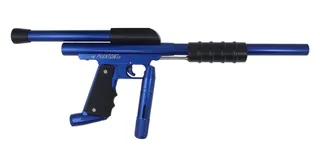












Hammerhead Mongoose vs WGP Autococker (classic)
Compare the Hammerhead Mongoose and WGP Autococker (classic) side by side: price, specs, firing modes, weight, and maintenance, and see which paintball gun is the better buy for your style of play.
| Hammerhead Mongoose | WGP Autococker (classic) | |
|---|---|---|
| Price Tier | Mid-Range | Mid-Range |
| Typical Price | $150-400 (used) | $150-600 (used) |
| Operation | Pump | Mechanical/pump Autococker (pneumatic timing) |
| Firing Modes | pump | pump, semi-auto (mechanical) |
| Caliber | .68 | .68 |
| Feed | Vertical / stock-class feed | Vertical / power feed |
| Air | HPA/CO2 | HPA/CO2 |
| Operating Pressure | ~250-350 psi | ~250-300 psi |
| Weight | 2 lb | 2.8 lb |
| Maintenance | Low | High |
Hammerhead Mongoose vs WGP Autococker (classic)
The Hammerhead Mongoose and WGP Autococker (classic) are both mid-range paintball guns, so the choice comes down to how each one fits your game rather than how much you spend. On price, the Hammerhead Mongoose runs roughly $100 less, so budget-first buyers will lean its way. Players who want less upkeep should look at the Hammerhead Mongoose, which rates low on maintenance and asks less of you between games. For a higher rate of fire and tournament-style play, the WGP Autococker (classic) pulls ahead with its electronic firing modes, while the Hammerhead Mongoose keeps things simpler and more rugged. At 2 lb the Hammerhead Mongoose is the easier carry over a long day on the field. The Hammerhead Mongoose is built with pump enthusiasts and collectors in mind. Bottom line: the Hammerhead Mongoose is the stronger all-round pick here, especially for a tight budget.